



Advanced Corrective Jaw Surgery for Facial Balance, Bite Correction & Better Oral Function
At Green Park Dental Hospital, we provide orthognathic surgery consultation and treatment planning for selected patients with jaw irregularities affecting bite, facial balance, chewing, speech, breathing, or oral function. Orthognathic surgery, also known as corrective jaw surgery, is performed to reposition the upper jaw, lower jaw, or both jaws when skeletal jaw discrepancies cannot be corrected with braces alone.
Jaw misalignment can affect chewing, speech, breathing, facial appearance, TMJ function, and long-term dental health. Orthognathic surgery combines advanced maxillofacial surgery with orthodontic treatment to achieve functional and aesthetic improvement.
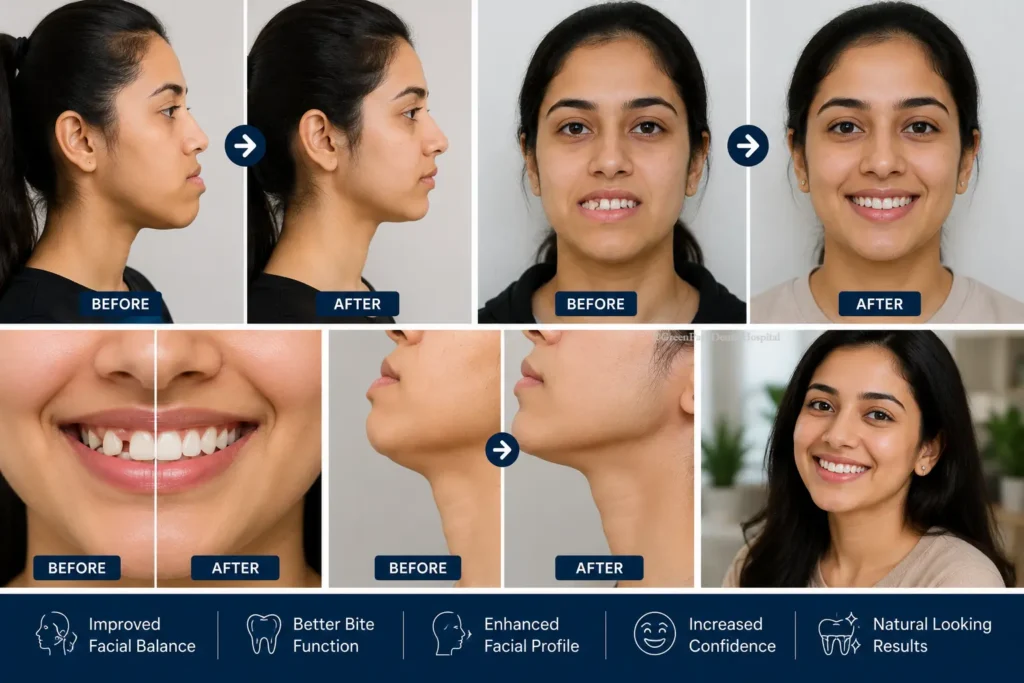
What Is Orthognathic Surgery?
Orthognathic Surgery is a specialized corrective jaw surgery performed to reposition misaligned jaws and improve the relationship between the upper jaw, lower jaw, teeth, and facial structures.
The surgery helps improve:
- Bite alignment
- Facial symmetry
- Jaw function
- Speech
- Breathing
- Chewing efficiency
- Smile aesthetics
Orthognathic surgery is typically performed in combination with orthodontic treatment such as braces or aligners.
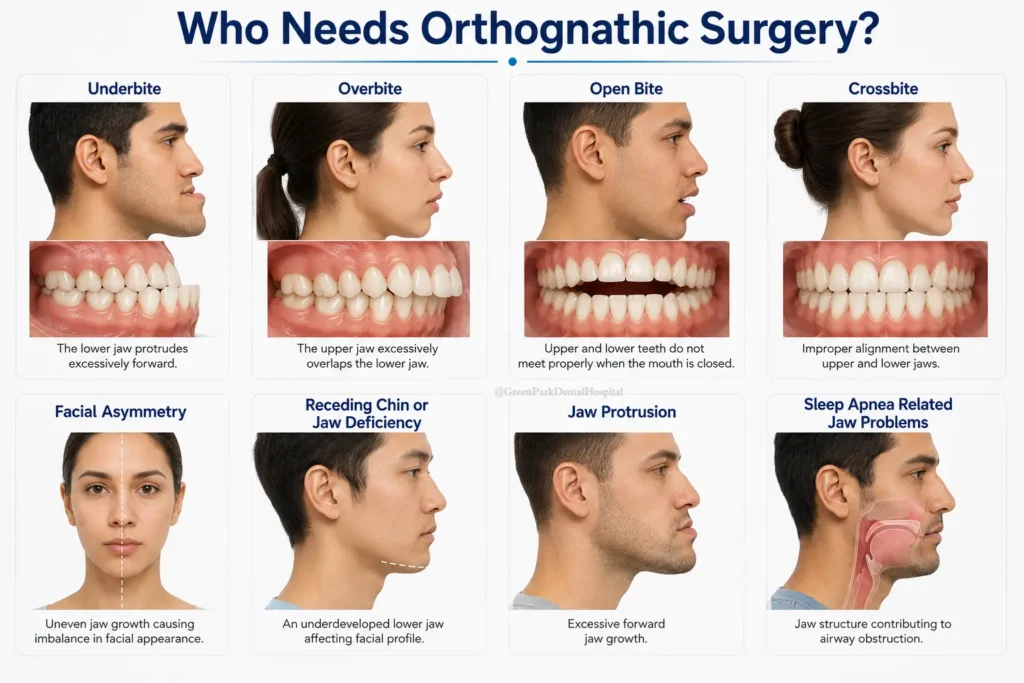
Who Needs Orthognathic Surgery?
Corrective jaw surgery may be recommended for patients with severe skeletal jaw discrepancies that cannot be corrected with orthodontics alone.
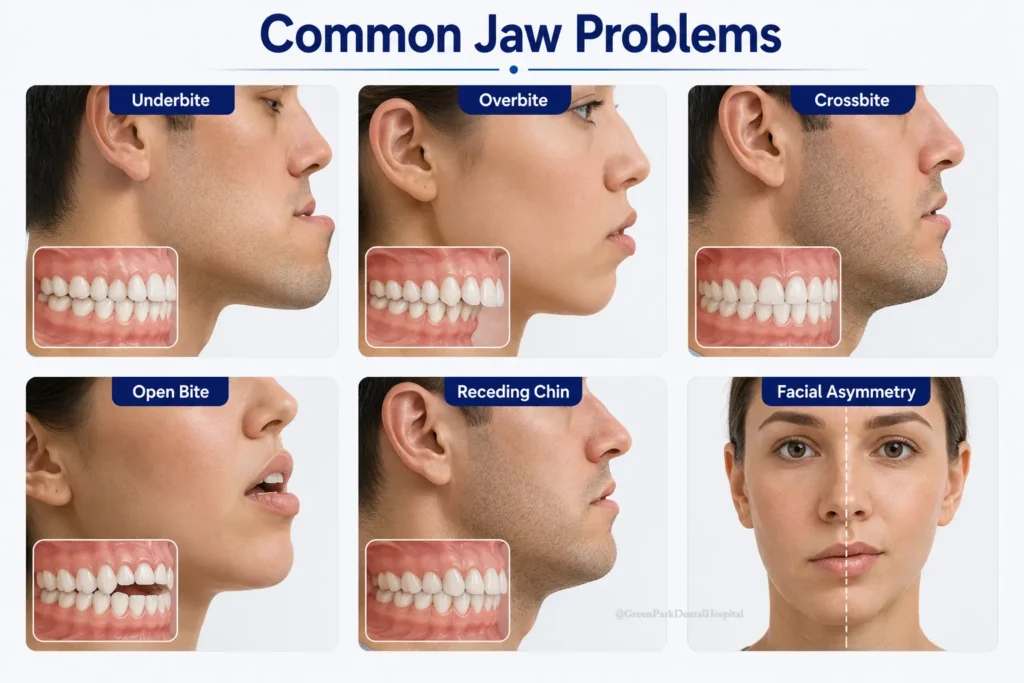
Common conditions include:
Underbite
The lower jaw protrudes excessively forward.
Overbite
The upper jaw excessively overlaps the lower jaw.
Open Bite
Upper and lower teeth do not meet properly when the mouth is closed.
Crossbite
Improper alignment between upper and lower jaws.
Facial Asymmetry
Uneven jaw growth causing imbalance in facial appearance.
Receding Chin or Jaw Deficiency
An underdeveloped lower jaw affecting facial profile.
Jaw Protrusion
Excessive forward jaw growth.
Sleep Apnea Related Jaw Problems
Jaw structure contributing to airway obstruction.
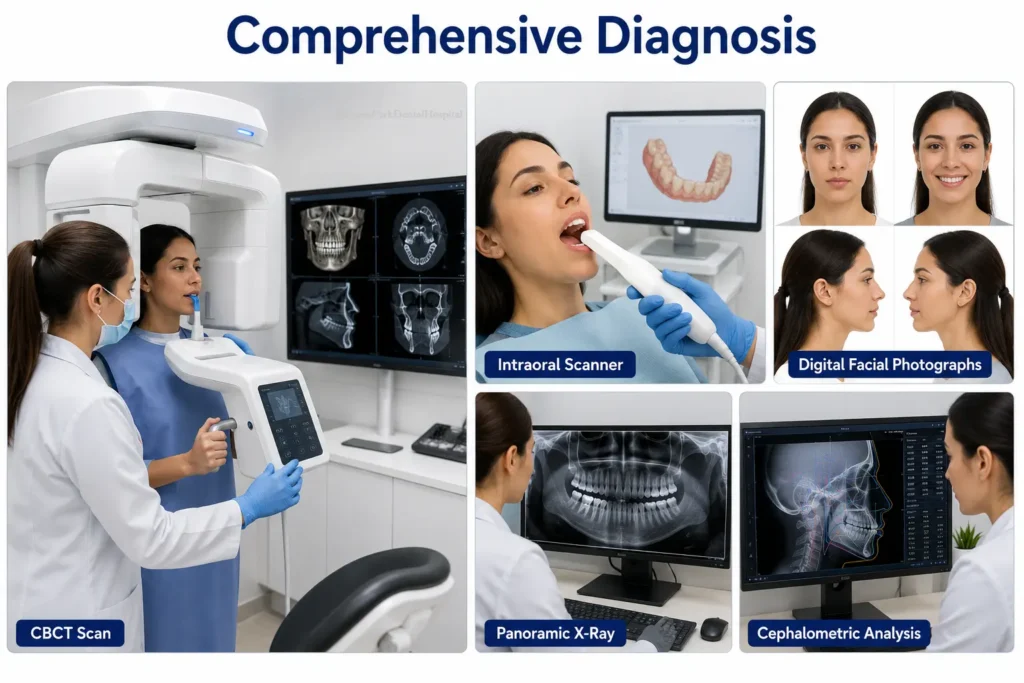
How Is Orthognathic Surgery Diagnosed and Planned?
Orthognathic surgery is recommended when jaw-related problems cannot be corrected with orthodontic treatment alone. A comprehensive evaluation helps determine whether corrective jaw surgery is appropriate for your condition.
The assessment may include:
- Detailed dental and medical history
- Clinical examination of the teeth, bite, jaw joints, and facial profile
- Digital photographs and facial analysis
- Dental impressions or intraoral digital scans
- Panoramic X-rays and cephalometric imaging
- Cone Beam Computed Tomography (CBCT) scans for three-dimensional evaluation
- Airway assessment when breathing or sleep-related concerns are present
- Orthodontic consultation to evaluate tooth positioning and bite relationships
Patients who may benefit from orthognathic surgery include those with:
- Severe overbite, underbite, or open bite
- Facial asymmetry
- Difficulty chewing or biting food
- Speech difficulties related to jaw position
- Jaw growth abnormalities
- Obstructive sleep apnea associated with jaw structure
- Congenital craniofacial conditions
Every patient requires an individualized evaluation before treatment recommendations are made.
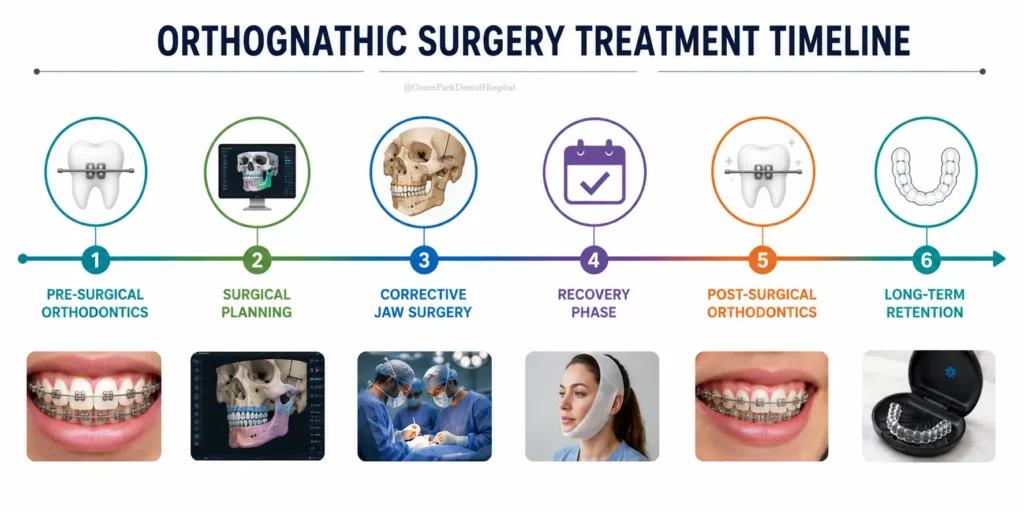
Orthognathic Surgery Treatment Timeline
What Is the Treatment Process?
Orthognathic surgery is typically performed as part of a coordinated treatment plan involving both orthodontic and surgical care.
1. Pre-Surgical Orthodontics
Braces or clear aligners are often used before surgery to position the teeth correctly within each jaw. This stage may last several months depending on the complexity of the case.
2. Surgical Planning
Advanced digital planning technologies, including CBCT imaging, intraoral scanning, and virtual surgical planning, help create a personalized surgical roadmap.
3. Corrective Jaw Surgery
The surgery is performed under general anesthesia by an oral and maxillofacial surgeon. Depending on the diagnosis, surgery may involve the upper jaw (maxilla), lower jaw (mandible), chin (genioplasty), or a combination of procedures.
4. Recovery Phase
Initial recovery typically occurs over several weeks. Swelling, temporary discomfort, dietary restrictions, and reduced jaw mobility are common during the early healing period.
5. Post-Surgical Orthodontics
Orthodontic treatment often continues after surgery to refine the bite and ensure optimal alignment.
6. Long-Term Retention
Retainers and follow-up appointments help maintain treatment results and monitor long-term stability.
Types of Orthognathic Surgery
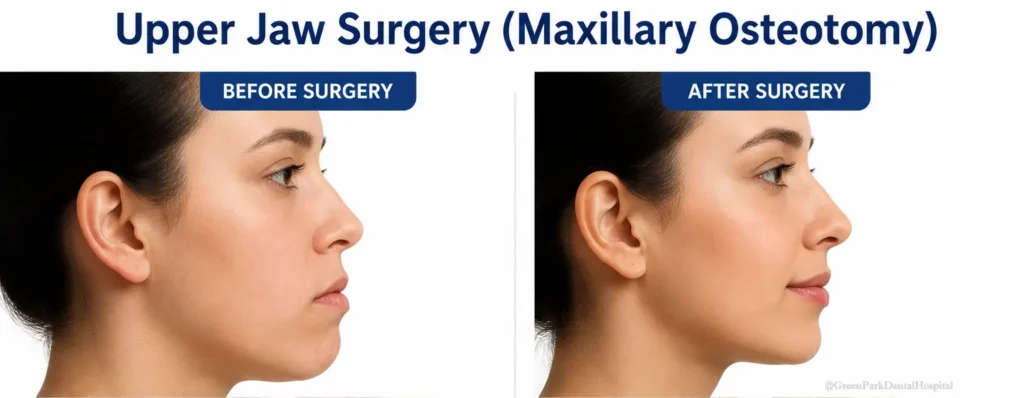
Performed to reposition the upper jaw when it is too far forward, backward, narrow, or vertically excessive.
Commonly Used For:
- Open bite correction
- Crossbite correction
- Midface deficiency
- Excessive gum display
- Upper jaw asymmetry
Lower Jaw Surgery (Mandibular Osteotomy)
Performed to reposition the lower jaw forward or backward.
Commonly Used For:
- Underbite
- Receding lower jaw
- Jaw protrusion
- Bite imbalance
Double Jaw Surgery (Bimaxillary Surgery)
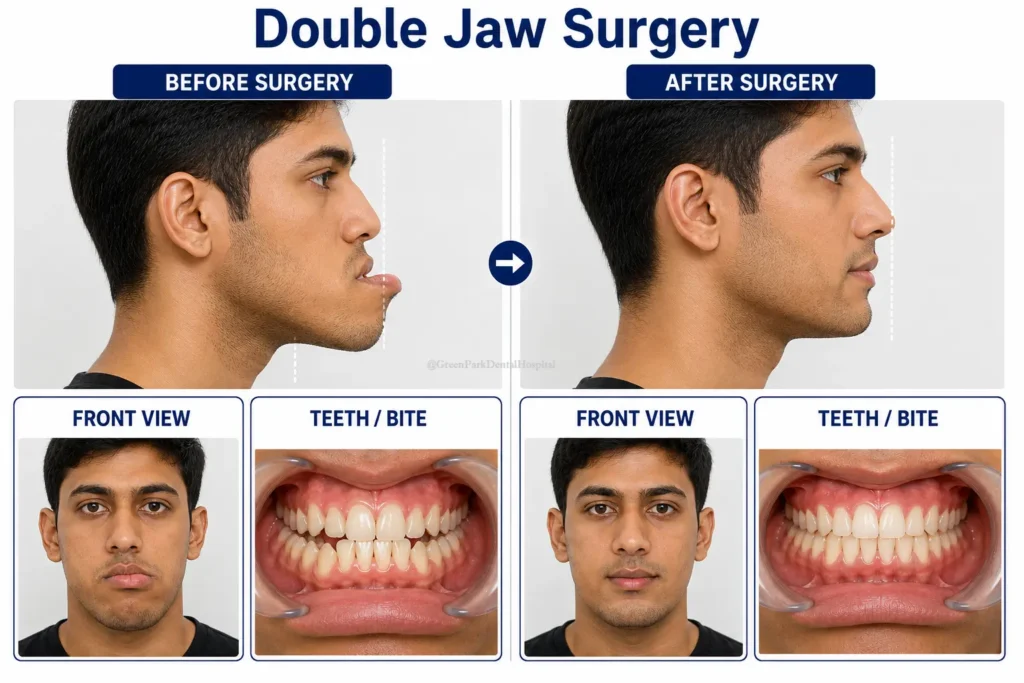
Both upper and lower jaws are repositioned simultaneously for comprehensive correction.
Commonly Used For:
- Severe jaw discrepancies
- Facial asymmetry
- Complex bite correction
- Airway improvement
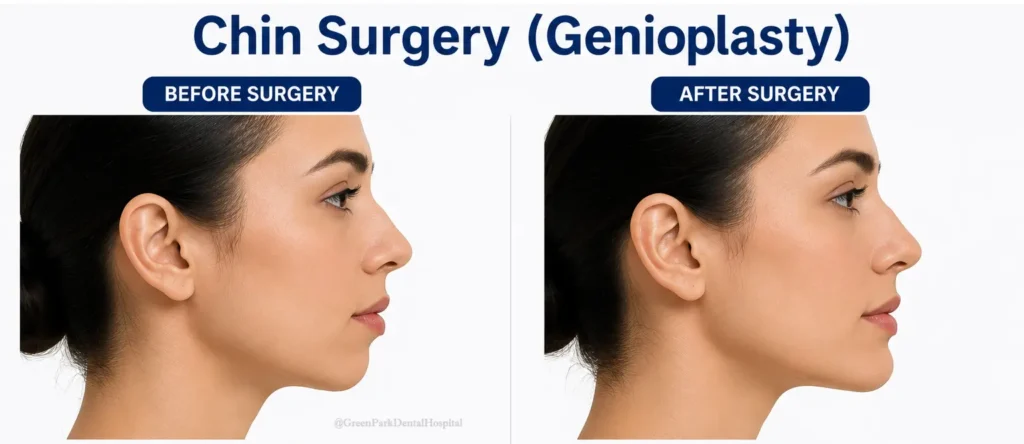
Chin Surgery (Genioplasty)
Chin reshaping surgery may be combined with orthognathic surgery for improved facial balance.
Alternatives to Orthognathic Surgery
Are There Alternatives to Corrective Jaw Surgery?
Treatment options depend on the severity and cause of the problem.
Possible alternatives may include:
Orthodontic Treatment Alone
Mild to moderate bite problems can sometimes be corrected using braces or clear aligners without surgery.
Restorative Dental Treatment
In selected cases, crowns, veneers, or other restorative procedures may help improve dental alignment and appearance.
Occlusal Splints and TMJ Therapy
Patients with jaw discomfort related to temporomandibular joint (TMJ) disorders may benefit from splints, physical therapy, or other conservative treatments.
Sleep Apnea Management
For patients with obstructive sleep apnea, treatment options may include:
- Continuous Positive Airway Pressure (CPAP)
- Oral appliance therapy
- Weight management
- Airway surgery
- Orthognathic surgery in selected cases
A specialist evaluation can determine the most appropriate treatment approach.
Who May Not Be a Suitable Candidate?
Contraindications and Precautions
Although orthognathic surgery is highly effective for many patients, it may not be appropriate for everyone.
Additional evaluation may be necessary for patients with:
- Uncontrolled diabetes
- Significant cardiovascular disease
- Active oral infections
- Untreated periodontal (gum) disease
- Poor oral hygiene
- Smoking or tobacco use
- Certain bone-healing disorders
- Psychological conditions affecting treatment expectations
Addressing these issues before surgery may improve treatment outcomes and recovery.
Risks and Potential Complications of Orthognathic Surgery
What Are the Risks of Jaw Surgery?
Like any major surgical procedure, orthognathic surgery carries potential risks and complications.
Possible risks include:
- Swelling and bruising
- Pain or discomfort
- Bleeding
- Infection
- Temporary or permanent numbness of the lips, chin, cheeks, or tongue
- Difficulty opening the mouth during healing
- Changes in bite alignment
- Damage to teeth or tooth roots
- Delayed bone healing
- Relapse or movement of the jaw after treatment
- Need for additional procedures
- Risks associated with general anesthesia
Most complications are uncommon, and your surgical team will discuss individual risks during consultation and treatment planning.
Recovery and Aftercare
What Should Patients Expect After Surgery?
Recovery experiences vary depending on the procedure performed and individual healing factors.
Patients may experience:
- Facial swelling
- Bruising
- Temporary numbness
- Mild to moderate discomfort
- Difficulty chewing
- Speech changes during the initial healing period
Aftercare recommendations commonly include:
- Following a soft-food or liquid diet
- Taking prescribed medications as directed
- Maintaining excellent oral hygiene
- Avoiding smoking and tobacco products
- Attending scheduled follow-up appointments
Following post-operative instructions carefully can support healing and improve treatment outcomes.
Long-Term Outcomes and Stability
Are the Results of Orthognathic Surgery Permanent?
Orthognathic surgery is designed to provide long-term correction of jaw alignment and functional problems.
For many patients, results remain stable for years when:
- Treatment planning is appropriate
- Orthodontic care is completed as recommended
- Retainers are used when prescribed
- Oral health is maintained
While significant relapse is uncommon, minor changes can occur over time due to aging, healing patterns, or other biological factors.
Signs You May Need Corrective Jaw Surgery
You may benefit from orthognathic surgery if you experience:
- Difficulty chewing or biting
- Jaw pain or TMJ discomfort
- Speech difficulties
- Facial imbalance
- Chronic mouth breathing
- Difficulty closing lips comfortably
- Sleep-related breathing problems
- Excessive tooth wear
- Severe bite misalignment
- Difficulty swallowing
A comprehensive orthodontic and jaw evaluation helps determine whether surgery is necessary.
Orthognathic Surgery Procedure
At Green Park Dental Hospital, orthognathic treatment is carefully planned using advanced digital imaging and interdisciplinary coordination.
1. Orthodontic Evaluation
Braces or aligners are usually initiated before surgery to align teeth properly.
2. Digital Imaging & Surgical Planning
CBCT scans, digital bite analysis, photographs, and jaw models are used for precise planning.
3. Surgical Procedure
Jaw bones are repositioned under general anesthesia using specialized maxillofacial surgical techniques.
4. Stabilization
Titanium plates and screws are used to stabilize the jaws during healing.
5. Post-Surgical Orthodontics
Orthodontic treatment continues after surgery for final bite refinement.
Is Orthognathic Surgery Painful?
Modern corrective jaw surgery is performed under general anesthesia, so patients do not feel pain during the procedure. Post-operative pain, swelling, tightness, bruising, numbness, and chewing difficulty are common and are usually managed with prescribed medications, diet changes, and follow-up care.
Temporary swelling and facial tightness are common during recovery.
Recovery After Orthognathic Surgery
Healing varies depending on the complexity of surgery.
Common Temporary Symptoms:
- Facial swelling
- Mild pain or discomfort
- Temporary numbness
- Difficulty chewing
- Jaw stiffness
- Temporary speech changes
Initial healing usually occurs within several weeks, while complete bone healing takes longer.
Risks and Limitations of Orthognathic Surgery
Like any major surgery, orthognathic surgery has potential risks and limitations. These may include bleeding, infection, reaction to anesthesia, swelling, bruising, temporary or prolonged numbness, jaw stiffness, bite changes, relapse, TMJ discomfort, dental injury, delayed healing, and the possible need for additional procedures.
Your surgeon will explain the benefits, risks, alternatives, and expected recovery based on your diagnosis and treatment plan.
Possible Temporary Numbness After Jaw Surgery
Temporary numbness of the lips, chin, cheeks, or tongue is a recognized part of recovery after some orthognathic procedures. Sensation often improves gradually during healing, although recovery varies between individuals.
Post-Surgical Care Instructions
To support proper healing:
Do:
- Follow soft or liquid diet instructions
- Maintain oral hygiene carefully
- Attend orthodontic follow-ups
- Take medications as prescribed
- Use cold compresses if advised
Avoid:
- Smoking or tobacco use
- Hard foods during healing
- Heavy physical activity initially
- Skipping orthodontic appointments
Proper aftercare significantly improves surgical outcomes.
Recent Advances in Orthognathic Surgery
Modern orthognathic surgery increasingly uses 3D CBCT imaging, virtual surgical planning, digital dental models, CAD/CAM surgical splints, patient-specific cutting guides, 3D-printed models, and interdisciplinary orthodontic-surgical workflows. These tools can improve planning accuracy and communication between the orthodontic and surgical teams, especially in complex jaw asymmetry and double jaw surgery cases.
Some patients may be suitable for surgery-first or surgery-early approaches, but these are not appropriate for everyone and require careful orthodontic and surgical assessment.
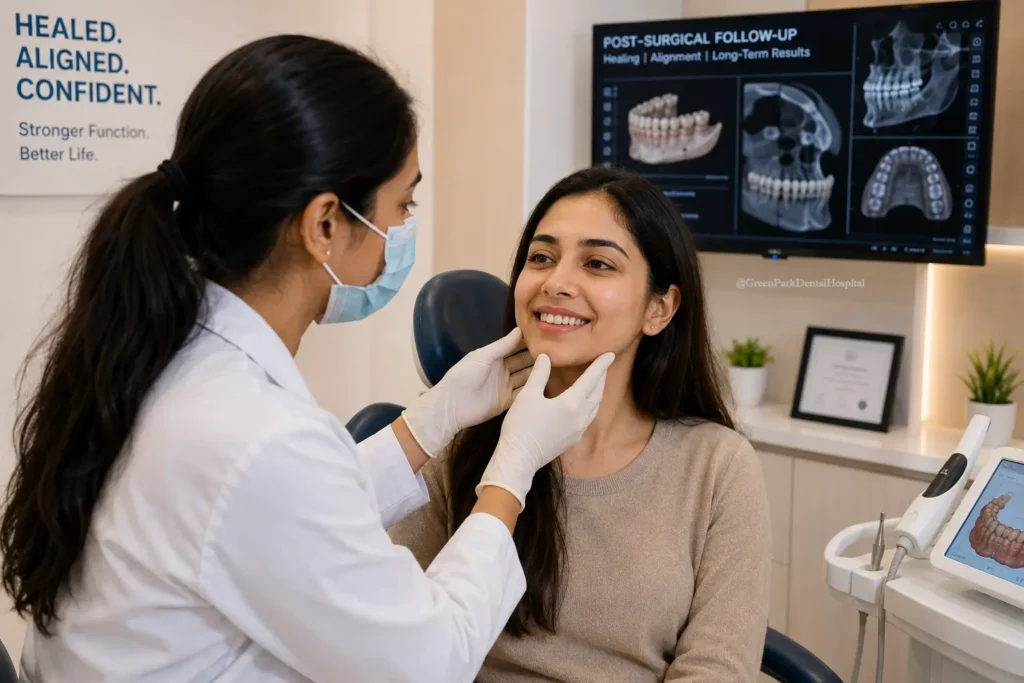
Advanced Jaw Correction Technology at Green Park Dental Hospital
We use modern maxillofacial and orthodontic technology for precise jaw correction:
- 3D CBCT imaging
- Digital smile analysis
- Virtual surgical planning
- Advanced orthodontic coordination
- Digital bite analysis
- Facial symmetry assessment
- Precision surgical rehabilitation
These technologies can support more accurate planning, better surgical communication, and improved visualization of expected jaw movements. Long-term stability depends on diagnosis, surgical execution, orthodontic finishing, healing, and patient compliance.
Why Choose Green Park Dental Hospital for Orthognathic Surgery?
Green Park Dental Hospital provides multidisciplinary evaluation, digital planning support, and personalized treatment coordination for patients considering orthognathic surgery.
Why choose us:
- Schedule a consultation to understand whether corrective jaw surgery is appropriate for your bite, facial balance, airway, or oral function concerns
- Modern digital surgical workflow
- Personalized facial rehabilitation
- Precision orthodontic coordination
- Advanced restorative dentistry
- Comprehensive smile rehabilitation
- Comfortable and hygienic environment
- Patient-focused multidisciplinary care
Our jaw correction planning is carried out through a multidisciplinary approach involving dental, orthodontic, and oral & maxillofacial surgical assessment. Patients are evaluated individually before any treatment recommendation is made.
(FAQ) Frequently Asked Questions
Q.1. At what age can orthognathic surgery be performed?
Q.2. Can braces alone correct severe jaw problems?
Q.3. Why Not Just Use Braces?
Q.4. Is orthognathic surgery only cosmetic?
Q.5. How long is recovery after jaw surgery?
Q.6. Will surgery leave visible scars?
Q.7. Can orthognathic surgery improve sleep apnea?
Q.8. Will I need braces along with orthognathic surgery?
Q.9. Can jaw surgery change my facial appearance?
Q.10. How long will I stay in the hospital after surgery?
Q.11. Can orthognathic surgery improve chewing ability?
Book Your Orthognathic Surgery Consultation in Hyderabad
Improve your bite, facial balance, and oral function with advanced Orthognathic Surgery at Green Park Dental Hospital. Whether you have jaw misalignment, bite problems, facial asymmetry, or functional jaw concerns, our experienced dental team is here to provide personalized jaw correction and smile rehabilitation solutions.
Schedule your consultation today with Dr. Syed Arshad Javeed and experience advanced corrective jaw treatment focused on aesthetics, function, and long-term oral health.
Medical Review
This content is intended for educational purposes and has been reviewed by qualified dental professionals involved in orthodontic, restorative, and orthognathic treatment planning. Individual treatment recommendations require a comprehensive clinical evaluation.
Medical Review & Accreditation
Author
Dr. Afnan Ayesha Zoya, BDS (Gold Medalist)
Associate Dental Surgeon
Green Park Dental Hospital, Hyderabad
Clinical Reviewer & Lead Expert
Dr. Syed Arshad Javeed, BDS
Founder & Senior Dental Surgeon
Green Park Dental Hospital, Hyderabad
10+ Years of Clinical Experience
References
- American Association of Oral and Maxillofacial Surgeons- Orthognathic Surgery Patient Information.
- American Association of Orthodontists- Surgical Orthodontics Resources.
- National Health Service- Corrective Jaw Surgery Guidance.
- Contemporary Orthodontics (latest edition).
- Peterson’s Principles of Oral and Maxillofacial Surgery (latest edition).
- Relevant peer-reviewed studies from the International Journal of Oral and Maxillofacial Surgery and Journal of Oral and Maxillofacial Surgery.
With access to
24 Hour
Emergency
Assistance
Booking your dental appointment is quick and easy. Our experienced team is ready to provide personalized care for your dental needs in a comfortable environment.
Service Recipient Says


Oxmox advised her not to do so, because there were thousands of bad Commas, wild Question Marks and devious.
Kolis Muller NY Citizen
Oxmox advised her not to do so, because there were thousands of bad Commas, wild Question Marks and devious.
Kolis Muller NY Citizen






Oxmox advised her not to do so, because there were thousands of bad Commas, wild Question Marks and devious.
Kolis Muller NY Citizen