Advanced Treatment for Dark or Discolored Root Canal Treated Teeth
At Green Park Dental Hospital, we provide advanced Internal Bleaching treatment to restore the natural color and appearance of darkened or discolored teeth, especially teeth that have undergone Root Canal Treatment. Internal bleaching is a specialized cosmetic dental procedure performed from inside the tooth to improve discoloration that cannot be corrected with regular teeth whitening methods.
A single dark tooth can significantly affect smile aesthetics and confidence. Internal bleaching offers a conservative and effective solution to brighten the tooth while preserving natural tooth structure.
Our cosmetic and restorative dental procedures are guided by Dr. Syed Arshad Javeed, known for advanced cosmetic dentistry, smile rehabilitation, and restorative dental care.
What Is Internal Bleaching?
Internal bleaching, also called intracoronal or non-vital bleaching, is a conservative cosmetic dental procedure option for discolored root canal treated teeth and can avoid unnecessary tooth reduction compared with crowns or veneers.Unlike regular external teeth whitening, internal bleaching targets discoloration originating within the tooth structure itself.
The whitening material is placed inside the tooth chamber to gradually lighten the discoloration and improve the tooth’s natural appearance.
Before internal bleaching, the dentist should confirm that the root canal treatment is healthy, the tooth has no active infection, and the existing restoration provides a proper seal.
A protective cervical barrier is essential to reduce leakage of bleaching material toward the root and surrounding tissues.
This is important because external cervical resorption is a known rare complication associated with non-vital bleaching, particularly with inappropriate technique, heat, or poor sealing.
Why Do Root Canal Treated Teeth Become Dark?
A root canal treated tooth may become discolored due to:
- Trauma or injury to the tooth
- Internal bleeding within the tooth
- Breakdown of blood pigments
- Pulp tissue degeneration
- Previous dental materials
- Incomplete removal of pulp remnants
- Aging of root canal treated teeth
This discoloration often appears gray, brown, yellow, or dark compared to surrounding teeth.
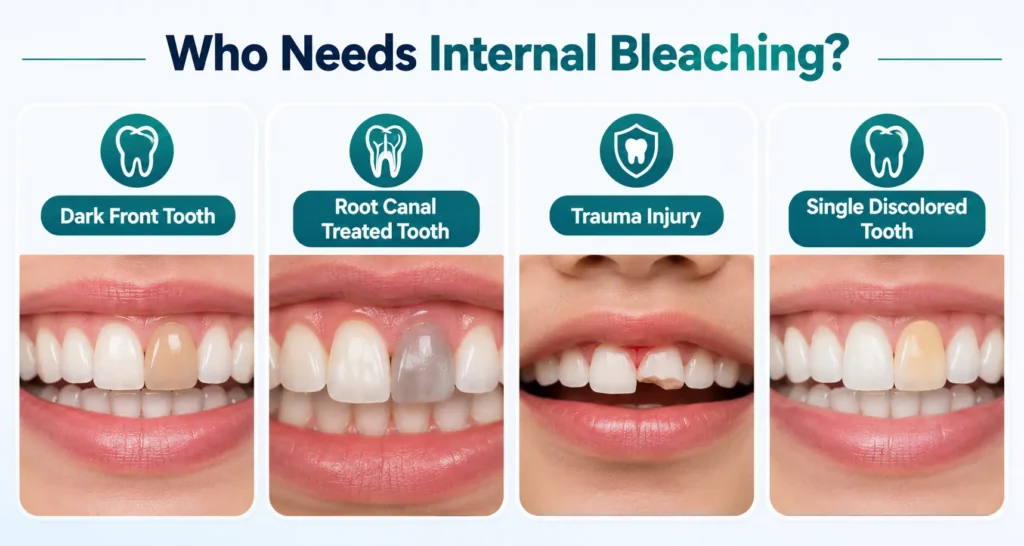
Who Needs Internal Bleaching?
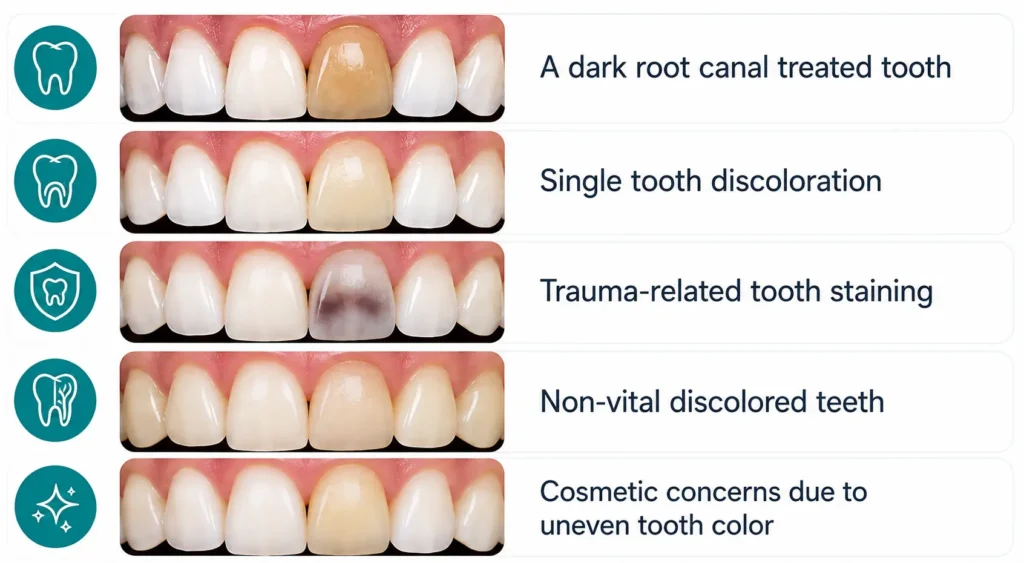
Internal bleaching is recommended for patients who have:
- A dark root canal treated tooth
- Single tooth discoloration
- Trauma-related tooth staining
- Non-vital discolored teeth
- Cosmetic concerns due to uneven tooth color
It is most suitable when the tooth structure is otherwise healthy and does not require crowns or veneers.
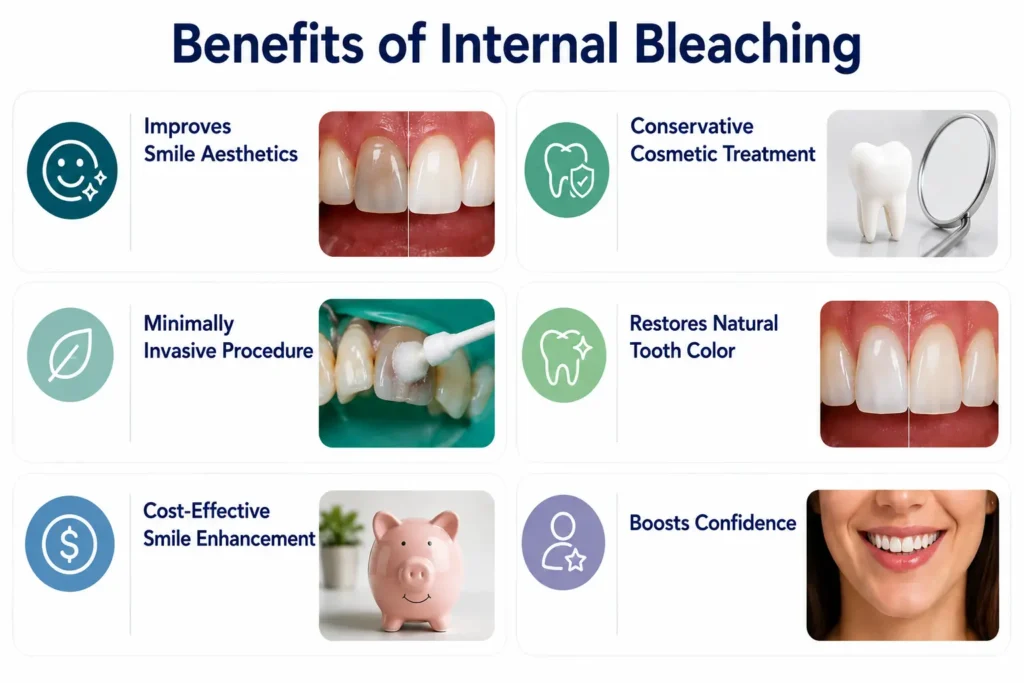
Benefits of Internal Bleaching
Improves Smile Aesthetics
Brightens darkened teeth and restores smile harmony.
Conservative Cosmetic Treatment
Preserves natural tooth structure without aggressive tooth reduction.
Minimally Invasive Procedure
A safe and comfortable cosmetic solution for non-vital teeth.
Restores Natural Tooth Color
Helps the treated tooth blend naturally with adjacent teeth.
Cost-Effective Smile Enhancement
Often more affordable than veneers or crowns for single tooth discoloration.
Boosts Confidence
Patients feel more comfortable smiling after color correction.
How Does Internal Bleaching Work?
Internal bleaching works by placing a whitening agent inside the tooth chamber after root canal treatment. The bleaching material penetrates the internal tooth structure and breaks down stain molecules responsible for discoloration.
Over time, the tooth gradually becomes lighter and more aesthetically pleasing.
Rare risks include temporary sensitivity, shade relapse, restoration leakage, or external cervical resorption, especially if unsuitable techniques are used.
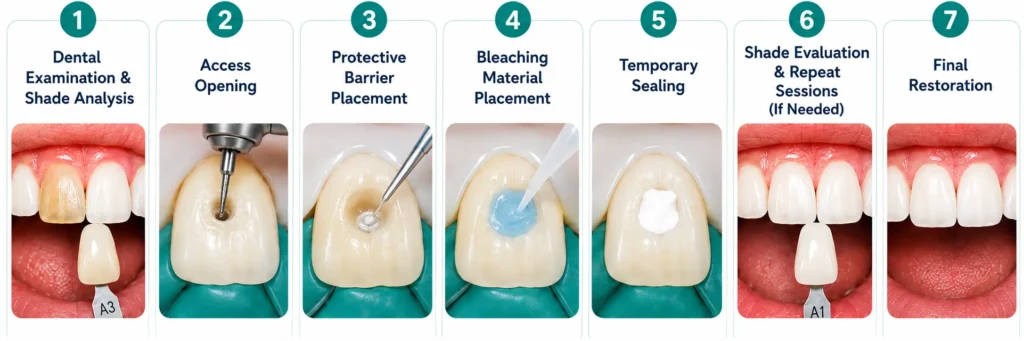
Internal Bleaching Procedure
At Green Park Dental Hospital, internal bleaching is performed with precision and careful cosmetic planning.
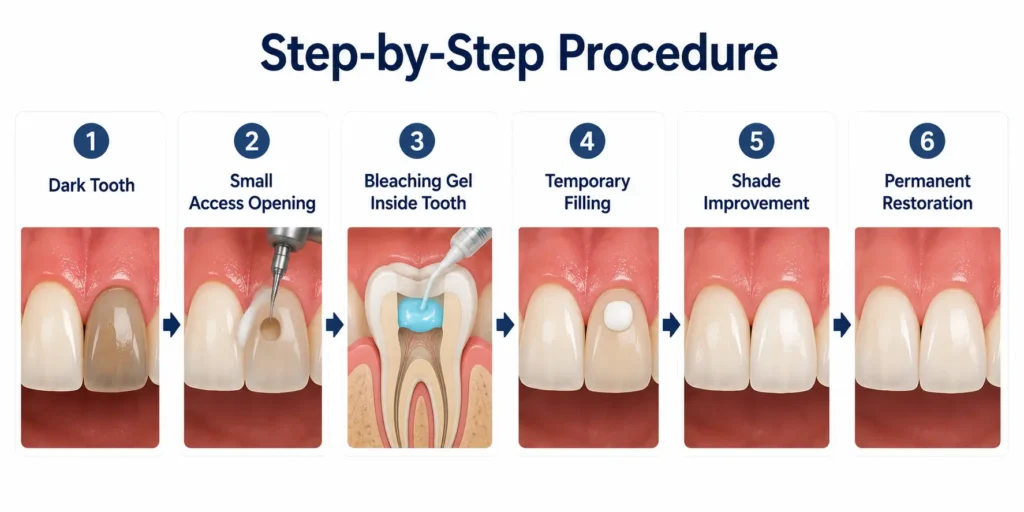
1. Dental Examination & Shade Analysis
The dentist evaluates the tooth, root canal condition, and level of discoloration.
2. Access Opening
A small opening is created in the previously treated tooth to access the inner chamber.
3. Protective Barrier Placement
A protective seal is placed over the root canal filling to protect surrounding structures.
4. Bleaching Material Placement
Special whitening material is placed inside the tooth chamber.
5. Temporary Sealing
The tooth is temporarily sealed to allow the bleaching material to work gradually.
6. Shade Evaluation & Repeat Sessions (If Needed)
The tooth shade is monitored and the process may be repeated until the desired color is achieved.
7. Final Restoration
Once the desired shade is reached, the bleaching material is removed and the tooth is permanently sealed.
Recent / Modern Advancements
Walking Bleach Technique
This is the commonly used modern approach where bleaching material is sealed inside the tooth for a few days and changed over visits until the desired shade is reached.
Digital Shade Matching
Digital shade analysis and clinical photography help compare the treated tooth with adjacent teeth more accurately.
Low-Risk Conservative Protocols
Modern protocols focus on controlled bleaching agents, cervical barrier placement, avoiding heat, and preserving natural tooth structure.
Restorative Sealing After Bleaching
Final permanent restoration should usually be delayed briefly after bleaching so bonding strength can recover before composite placement.
How Long Does Internal Bleaching Take?
The treatment may require multiple visits depending on the severity of discoloration and the desired whitening result. Some teeth respond faster than others.
Results are usually noticeable within a few sessions.
Is Internal Bleaching Safe?
Yes. Internal bleaching is generally considered safe when performed by experienced dental professionals using proper techniques and protective barriers.
At Green Park Dental Hospital, every procedure is carefully planned to protect tooth structure and surrounding tissues.
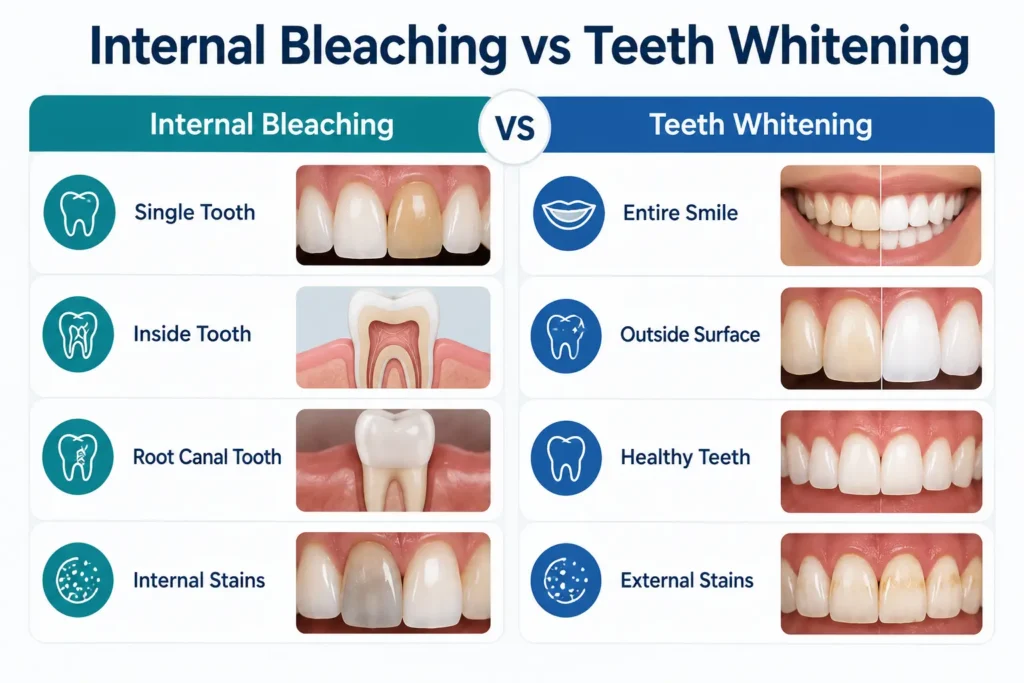
Internal Bleaching vs External Teeth Whitening
Feature | Internal Bleaching | External Whitening |
Treatment Area | Inside the tooth | Outer tooth surface |
Used For | Root canal treated teeth | Natural vital teeth |
Best For | Single dark tooth | General tooth whitening |
Procedure Type | Non-vital bleaching | Surface bleaching |
Whitening Method | Internal whitening agent | External whitening gel |
When Is a Crown Recommended Instead?
In some cases, crowns or veneers may be recommended instead of internal bleaching if:
- The tooth is structurally weak
- There is severe damage or fracture
- Large restorations are present
- Long-term cosmetic rehabilitation is required
Our cosmetic dental team evaluates the most suitable option for each patient individually.
Advanced Cosmetic Dentistry at Green Park Dental Hospital
We provide modern aesthetic dental solutions using advanced restorative and cosmetic techniques:
- Internal bleaching procedures
- Teeth whitening
- Veneers & smile designing
- Digital shade analysis
- Cosmetic restorative dentistry
- Root canal rehabilitation
- Smile makeover treatments
Why Choose Green Park Dental Hospital for Internal Bleaching?
Patients trust Green Park Dental Hospital for cosmetic smile rehabilitation because we focus on conservative, natural-looking smile enhancement.
Why choose us:
- Expertise in cosmetic restorative dentistry
- Advanced smile rehabilitation
- Personalized aesthetic treatment planning
- Modern whitening techniques
- Conservative cosmetic procedures
- Comfortable and hygienic environment
- Experienced cosmetic dental team
- Patient-focused smile enhancement
Our cosmetic dental procedures are guided by Dr. Syed Arshad Javeed, known for advanced restorative and smile makeover dentistry.
Post-Treatment Care After Internal Bleaching
To maintain results:
- Maintain good oral hygiene
- Avoid tobacco use
- Attend regular dental checkups
- Avoid trauma to the treated tooth
- Follow your dentist’s instructions carefully
Proper maintenance helps preserve long-term cosmetic results.
(FAQ) Frequently Asked Questions
Book Your Internal Bleaching Consultation in Hyderabad
Restore the natural beauty of your smile with advanced Internal Bleaching treatment at Green Park Dental Hospital. Whether you have a dark root canal treated tooth or single tooth discoloration affecting your confidence, our experienced cosmetic dental team is here to provide safe and effective smile enhancement.
Schedule your consultation today with Dr. Syed Arshad Javeed and experience advanced cosmetic dentistry with precision, comfort, and natural-looking results.














Oxmox advised her not to do so, because there were thousands of bad Commas, wild Question Marks and devious.
Kolis Muller NY Citizen