Microsurgical Root-End Treatment to Help Preserve Teeth with Persistent Infection
At Green Park Dental Hospital, we provide advanced Apicoectomy treatment to save teeth affected by persistent infection after Root Canal Treatment. An apicoectomy, also known as Root-End Surgery or Root-End Resection, is a minor surgical procedure performed when infection or inflammation continues around the root tip of a tooth even after conventional root canal therapy.
The procedure is designed to remove infected tissue around the root tip, seal the root end, and help preserve the natural tooth when clinically appropriate.
Our advanced endodontic and restorative procedures are guided by Dr. Syed Arshad Javeed, known for precision restorative dentistry, dental implants, and full mouth rehabilitation.
What Is an Apicoectomy?
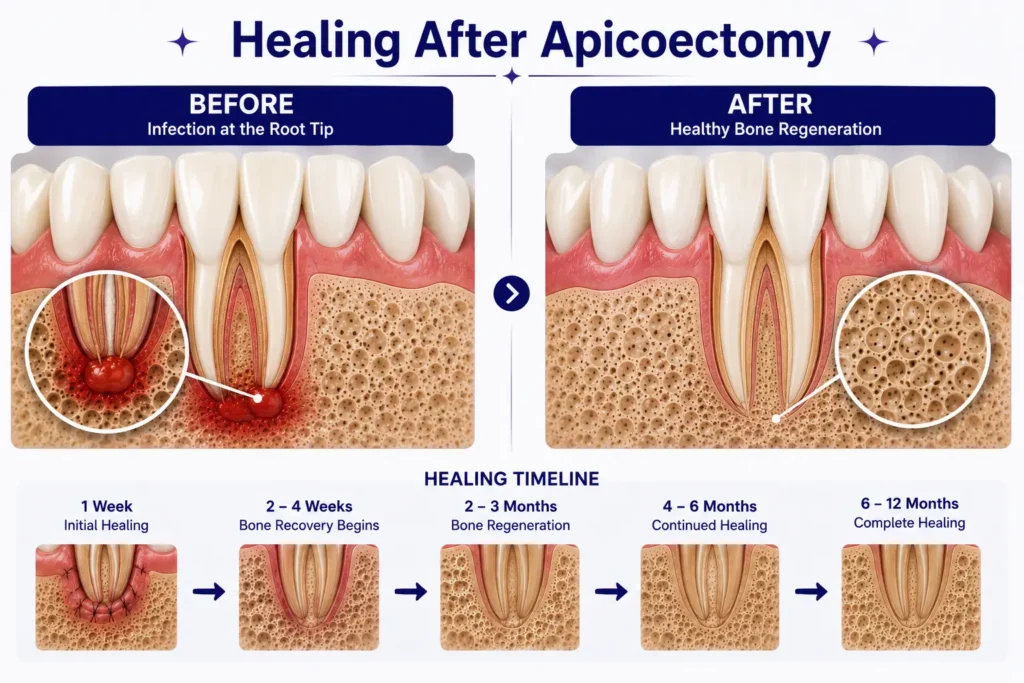
An Apicoectomy is a microsurgical dental procedure in which the tip of the tooth root (apex) and surrounding infected tissue are surgically removed to eliminate persistent infection.
After removing the infected root tip, the end of the root canal is sealed to prevent reinfection.
Apicoectomy is usually recommended when:
- Root canal treatment alone is not successful
- Infection persists after RCT
- A cyst or lesion develops near the root tip
- Retreatment is not feasible or effective
The goal is to save the natural tooth and avoid extraction.
Why Is Apicoectomy Needed?
Although most root canal treatments heal successfully, some teeth may continue to develop infection due to:
- Hidden root canal anatomy
- Persistent bacterial infection
- Cracks or fractures
- Calcified canals
- Previous failed root canal treatment
- Cysts or lesions near root tips
- Complex root structures
In such cases, apicoectomy may be considered when nonsurgical root canal retreatment is not suitable, predictable, or sufficient.
Signs You May Need an Apicoectomy
You may require root-end surgery if you experience:
- Persistent tooth pain after root canal treatment
- Swelling near the treated tooth
- Gum boils or pus discharge
- Recurrent dental infection
- Bone loss around root tip
- Tenderness while biting
- Persistent inflammation visible on X-rays
Sometimes the infection may be detected only during routine dental radiographic examination.
Benefits of Apicoectomy
Saves the Natural Tooth
Helps preserve teeth that might otherwise require extraction.
Eliminates Persistent Infection
Removes infected tissue and root-end bacteria effectively.
Prevents Tooth Extraction
Maintaining the natural tooth often helps preserve jawbone and oral function.
Improves Oral Health
Removes chronic infection and inflammation.
Long-Term Tooth Preservation
May extend the functional life of a treated tooth when the tooth is restorable and follow-up care is maintained.
Minimally Invasive Microsurgical Procedure
Modern techniques improve precision, comfort, and healing.
When Is Apicoectomy Recommended?
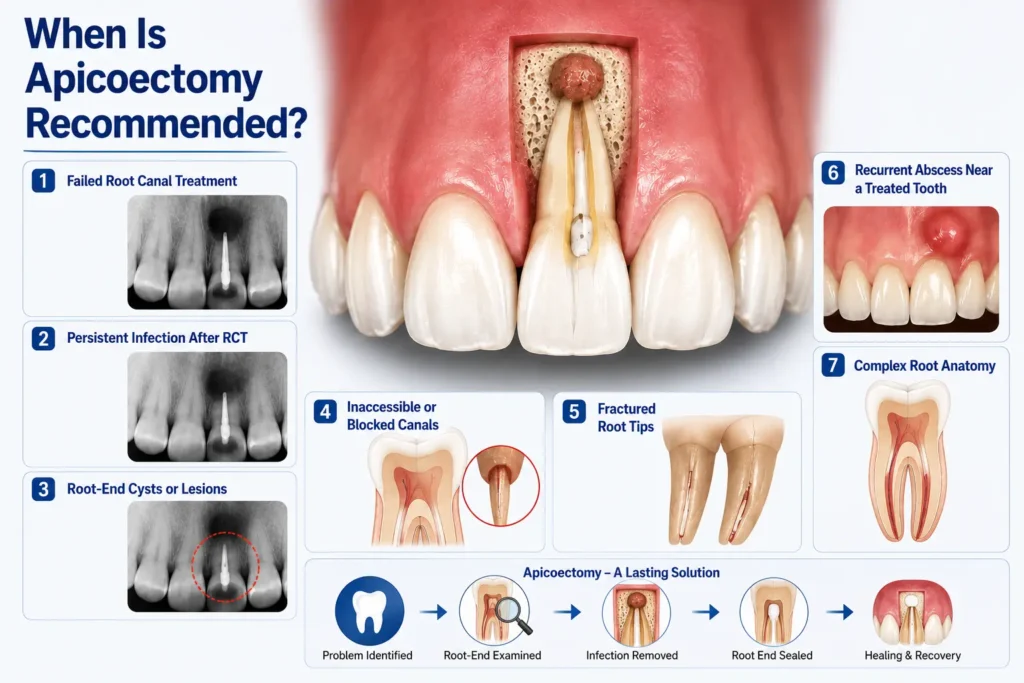
Apicoectomy may be advised in cases such as:
- Failed root canal treatment
- Persistent infection after RCT
- Root-end cysts or lesions
- Inaccessible or blocked canals
- Fractured root tips
- Recurrent abscess near a treated tooth
- Complex root anatomy
It is generally considered after evaluating whether nonsurgical retreatment is possible.
Apicoectomy Procedure
At Green Park Dental Hospital, apicoectomy procedures are performed using advanced surgical and digital diagnostic techniques for precision and comfort.
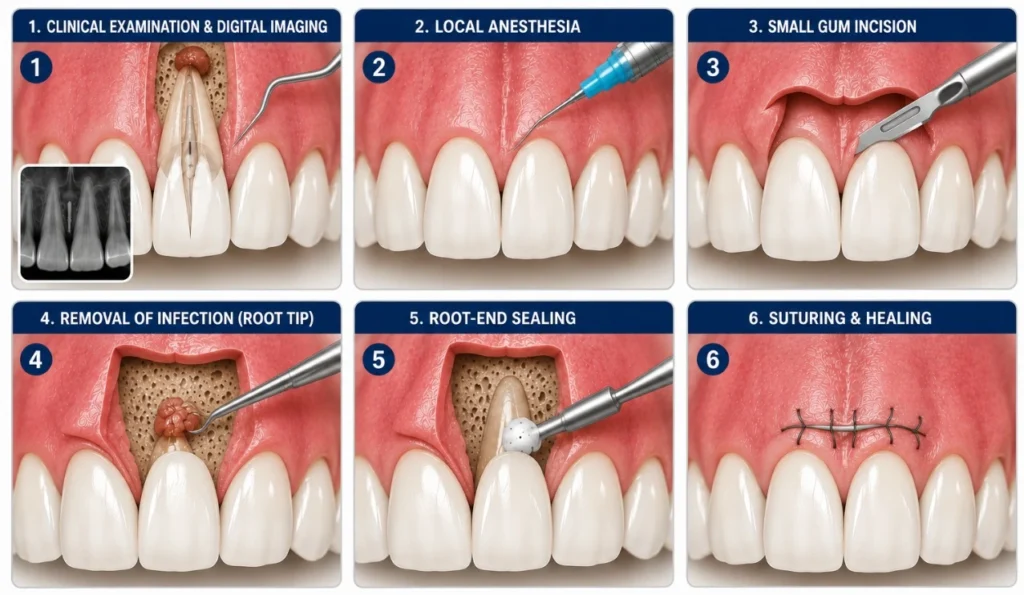
1. Clinical Examination & Digital Imaging
The dentist evaluates the tooth, surrounding bone, and root condition using digital X-rays or CBCT imaging.
2. Local Anesthesia
The area around the tooth is completely numbed for a comfortable procedure.
3. Small Gum Incision
A small incision is made in the gum tissue near the affected tooth.
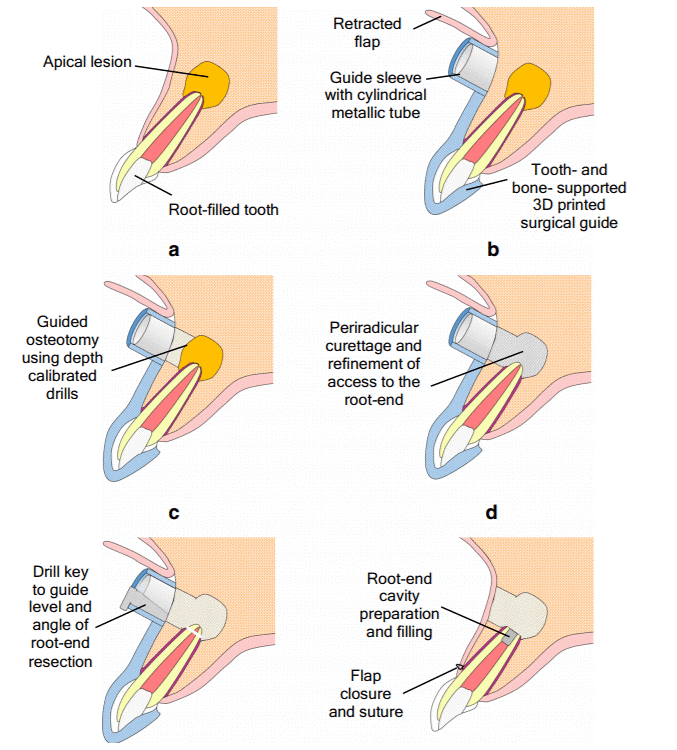
4. Removal of Infection
The infected tissue and root tip are carefully removed.
5. Root-End Sealing
The root canal tip is sealed with a biocompatible filling material to prevent reinfection.
6. Suturing & Healing
The gum tissue is repositioned and sutured for healing.
Possible Risks and Limitations
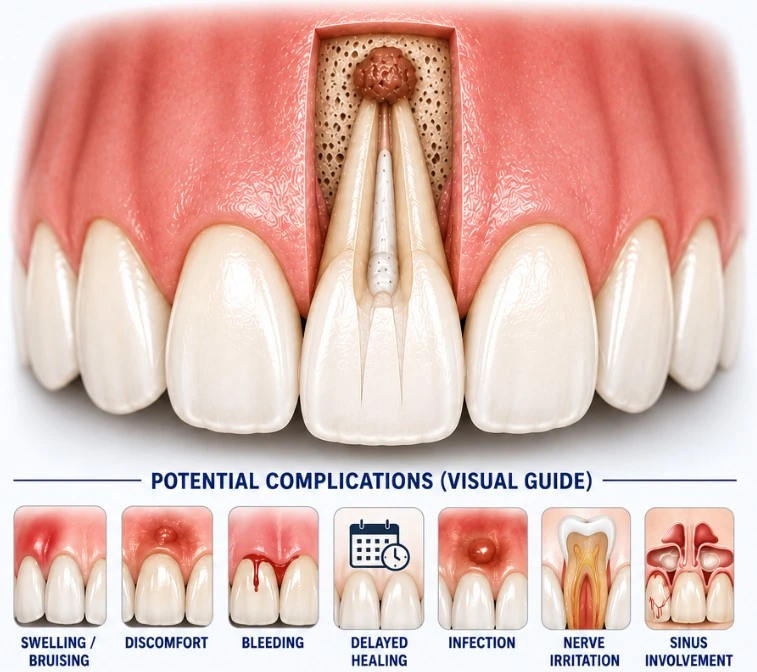
Apicoectomy is generally considered a safe and well-established procedure when performed by an experienced dentist or endodontist. However, as with any surgical procedure, potential risks may include:
✓ Temporary swelling or bruising
✓ Mild discomfort after surgery
✓ Bleeding at the surgical site
✓ Delayed healing
✓ Persistent or recurrent infection
✓ Temporary numbness or nerve irritation in certain areas
✓ Sinus involvement when treating some upper back teeth
Most complications are uncommon and can often be managed successfully with appropriate care and follow-up.
Is Apicoectomy Painful?
Modern apicoectomy procedures are generally comfortable because local anesthesia effectively numbs the area. Most patients experience minimal discomfort during surgery.
Mild swelling or soreness after the procedure is temporary and manageable with prescribed medications.
Modern Apicoectomy Techniques
Modern apicoectomy procedures may use dental operating microscopes, CBCT-guided diagnosis, ultrasonic root-end preparation, microsurgical instruments, bioceramic root-end filling materials such as MTA or bioceramic putty, and minimally invasive flap designs. These advances can improve visibility, precision, sealing ability, and case planning.
Recovery After Apicoectomy
Recovery usually progresses smoothly within a few days.
Temporary Symptoms May Include:
- Mild swelling
- Slight tenderness
- Minor bruising
- Temporary discomfort while chewing
Most patients resume normal routine activities shortly after treatment.
Post-Operative Care Instructions
To support proper healing:
Do:
- Take medications as prescribed
- Use cold compresses if advised
- Maintain oral hygiene carefully
- Eat soft foods temporarily
- Attend follow-up appointments
Avoid:
- Smoking or tobacco use
- Hard or crunchy foods initially
- Vigorous rinsing immediately after surgery
- Excessive physical activity immediately after treatment
Proper aftercare improves healing and long-term treatment success.
Apicoectomy vs Tooth Extraction
Feature | Apicoectomy | Tooth Extraction |
Goal | Save natural tooth | Remove tooth completely |
Bone Preservation | Preserves bone structure | Bone loss may occur |
Tooth Function | Maintains natural bite | Requires replacement |
Long-Term Restoration | Natural tooth retained | Implant/bridge/denture may be needed |
Procedure Type | Minor surgical endodontic treatment | Surgical removal |
Whenever possible, preserving the natural tooth through apicoectomy is often preferred over extraction.
Advanced Endodontic Care at Green Park Dental Hospital
We provide modern root canal and microsurgical endodontic procedures using advanced technology:
- Digital dental imaging
- CBCT-guided diagnosis
- Microsurgical endodontics
- Precision root-end surgery
- Advanced root canal retreatment
- Restorative rehabilitation
- Biocompatible sealing materials
These technologies improve accuracy, healing, and long-term success.
Why Choose Green Park Dental Hospital for Apicoectomy?
Patients trust Green Park Dental Hospital for advanced restorative and surgical dental care because we focus on preserving natural teeth with precision-based treatment.
Why choose us:
- Expertise in advanced root canal procedures
- Precision microsurgical techniques
- Digital diagnostic technology
- Conservative tooth preservation approach
- Advanced restorative dentistry
- Comfortable and hygienic surgical environment
- Personalized treatment planning
- Expertise in dental rehabilitation
Our advanced endodontic and restorative procedures are guided by Dr. Syed Arshad Javeed, known for advanced smile rehabilitation and restorative dentistry.
(FAQ) Frequently Asked Questions
Book Your Apicoectomy Consultation in Hyderabad
Save your natural tooth with advanced Apicoectomy treatment at Green Park Dental Hospital. Whether you have persistent infection after root canal treatment, recurring swelling, or root-end complications, our experienced dental team is here to provide precision-based tooth preservation care.
Schedule your consultation today with Dr. Syed Arshad Javeed and experienced advanced endodontic microsurgery focused on preserving your natural smile.














Oxmox advised her not to do so, because there were thousands of bad Commas, wild Question Marks and devious.
Kolis Muller NY Citizen