Advanced Tooth Preservation Treatment for Severely Damaged Molars
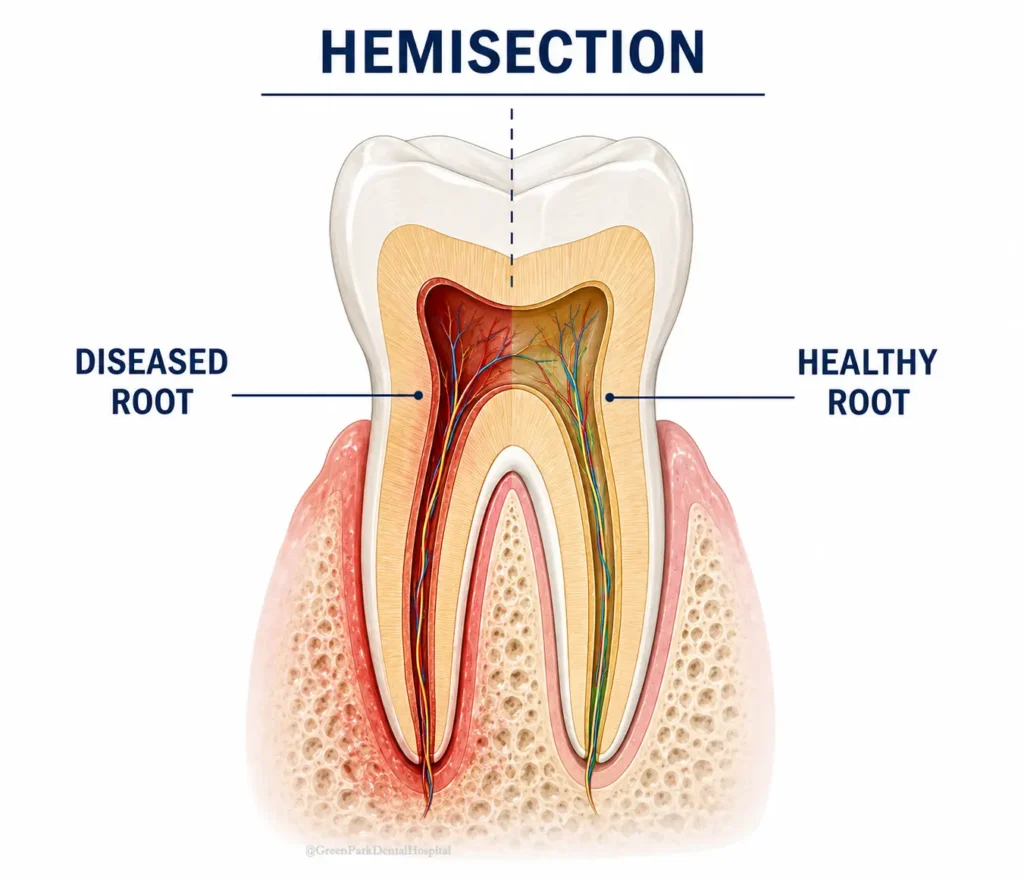
At Green Park Dental Hospital, we provide advanced Hemisection treatment to preserve natural teeth affected by severe decay, fracture, periodontal disease, or root damage. Hemisection is a conservative dental procedure in which a multi-rooted tooth is surgically divided and the diseased root along with its associated crown portion is removed while preserving the healthy remaining root and tooth structure.
When clinically feasible, preserving natural tooth structure may be preferred over extraction, provided the remaining tooth has adequate bone support, restorability, and long-term prognosis. Hemisection helps maintain oral function, preserve jawbone support, and avoid complete tooth removal in carefully selected cases.
Our advanced restorative and surgical procedures are guided by Dr. Syed Arshad Javeed, known for precision restorative dentistry, implant rehabilitation, and full mouth rehabilitation.
What Is Hemisection?
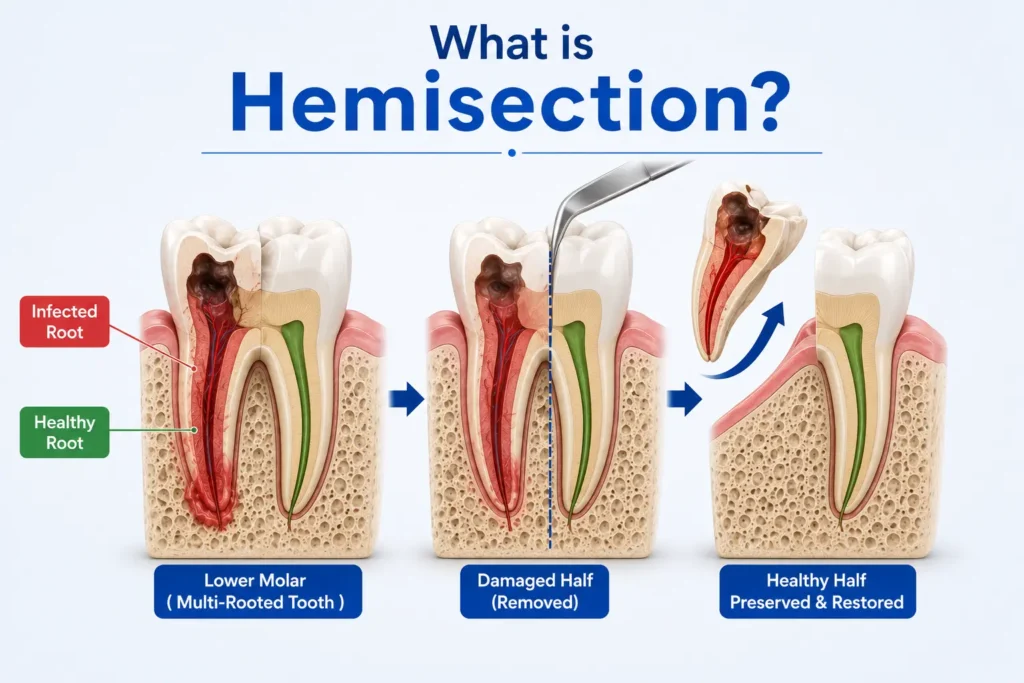
Hemisection is a specialized dental procedure involving the surgical separation of a multi-rooted tooth — most commonly a lower molar — so that the damaged root and associated crown portion can be removed while preserving the healthy root.
The remaining portion of the tooth is restored to support chewing function and long-term oral health, provided appropriate maintenance and follow-up care are maintained.
Hemisection is considered a conservative alternative to complete extraction and implant placement in selected clinical situations.
Why Is Hemisection Performed?
Hemisection may be recommended when only one root of a multi-rooted tooth is severely affected while the other root remains healthy and treatable.
The procedure aims to:
- Preserve natural tooth structure
- Maintain chewing function
- Retain supporting jawbone
- Avoid complete extraction
- Reduce the need for extensive replacement procedures
Conditions That May Require Hemisection
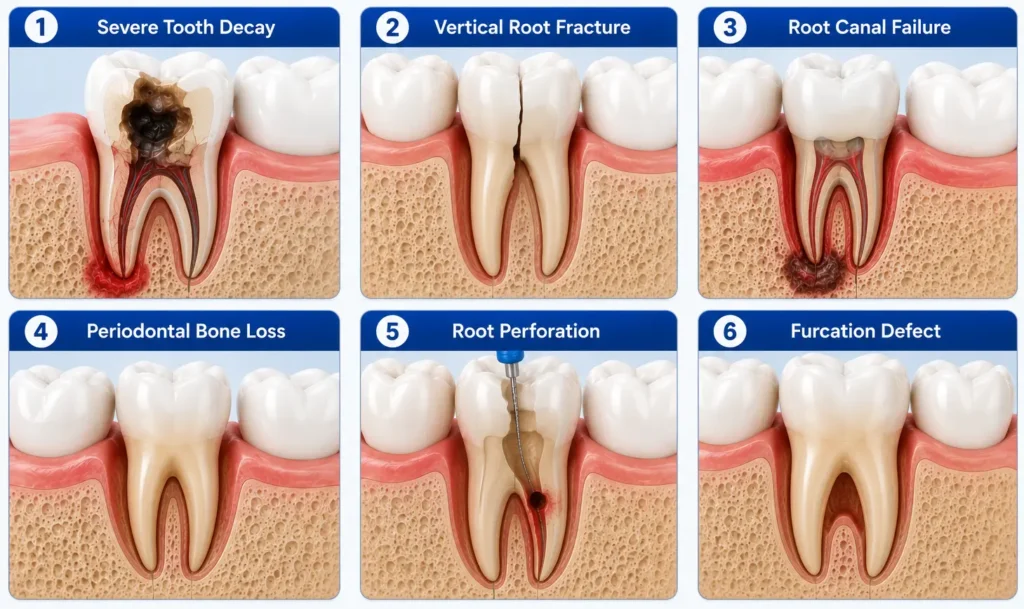
Hemisection may be considered in cases of:
Severe Decay Affecting One Root
When decay damages only one portion of a molar tooth.
Vertical Root Fracture
A cracked or fractured root affecting only one root segment.
Advanced Periodontal Disease
Localized bone loss or furcation involvement affecting one root.
Failed Root Canal in One Root
Persistent infection confined to one root while the remaining root is healthy.
Root Perforation
Iatrogenic or pathological perforation involving only one root.
Furcation Defects
Advanced furcation involvement where one root has poor prognosis.
Benefits of Hemisection
Preserves Natural Tooth Structure
Maintains a portion of the patient’s natural tooth instead of complete extraction.
Helps Maintain Jawbone
Preserving the root helps maintain surrounding bone support.
Conservative Treatment Option
Offers a tooth-saving alternative to implants or bridges.
Maintains Chewing Function
The remaining tooth structure can continue functioning effectively after restoration.
Cost-Effective in Selected Cases
May reduce the need for complete tooth replacement procedures.
Supports Long-Term Oral Stability
With proper case selection, root canal treatment, periodontal care, and a well-designed restoration, hemisected teeth may remain functional for several years; however, long-term outcomes vary.
Who Is a Good Candidate for Hemisection?
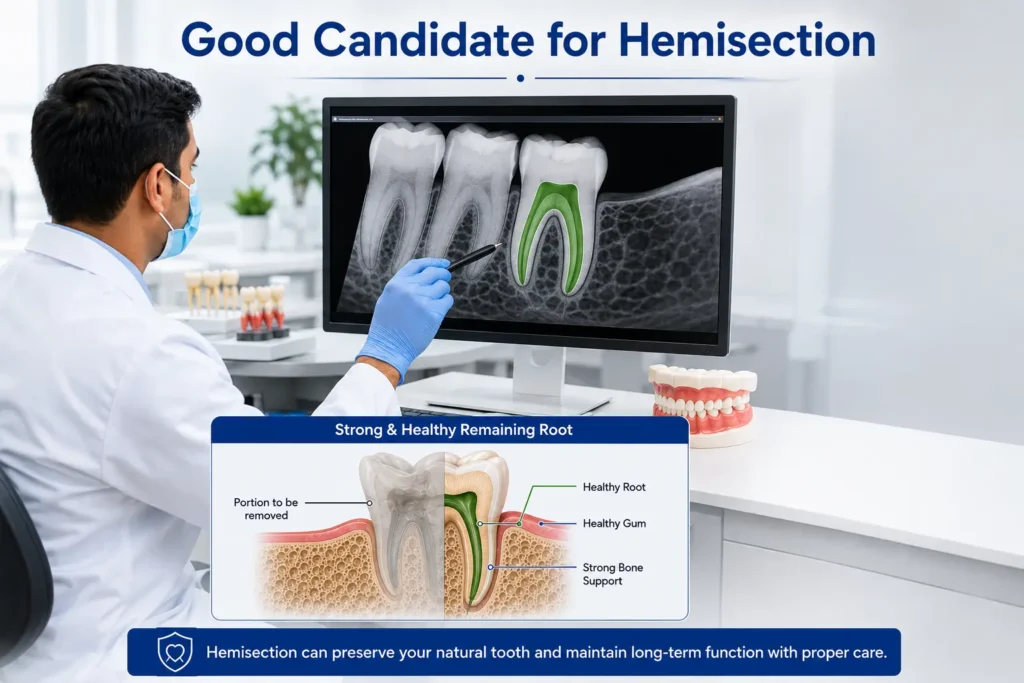
Successful hemisection depends on careful case selection.
Ideal candidates usually have:
- One healthy remaining root
- Good bone support around the remaining root
- Favorable root anatomy
- Treatable root canal condition
- Good oral hygiene
- Adequate periodontal health
Proper restorative planning is essential for long-term success.
Hemisection Procedure
At Green Park Dental Hospital, hemisection procedures are carefully planned using advanced diagnostic and restorative techniques.
1. Clinical Examination & Digital Imaging
The dentist evaluates the tooth using digital X-rays or CBCT imaging to assess roots, bone support, and restorability.
2. Root Canal Treatment (If Required)
The healthy remaining root may undergo root canal treatment before surgery.
3. Local Anesthesia
The treatment area is numbed for patient comfort.
4. Tooth Sectioning
The tooth is carefully divided through the furcation area.
5. Removal of Diseased Root
The damaged root and associated crown portion are removed.
6. Site Cleaning & Shaping
The remaining tooth structure is shaped and smoothed for healing and restoration.
7. Final Restoration
The remaining root portion is restored using a crown or bridge for long-term function.
Is Hemisection Painful?
Modern hemisection procedures are generally comfortable because local anesthesia effectively numbs the treatment area. Most patients experience minimal discomfort during the procedure.
Mild soreness or swelling after surgery is temporary and manageable with prescribed medications.
Recovery After Hemisection
Healing usually progresses smoothly with proper care.
Temporary Symptoms May Include:
- Mild swelling
- Slight tenderness
- Temporary chewing discomfort
- Minor gum sensitivity
Most patients return to normal routine activities shortly after treatment.
Hemisection vs Tooth Extraction
Feature | Hemisection | Complete Extraction |
Natural Tooth Preservation | Partial tooth retained | Tooth completely removed |
Bone Preservation | Better maintained | Bone loss may occur |
Oral Function | Maintained with restoration | Requires replacement |
Conservative Approach | Yes | No |
Replacement Need | Reduced in selected cases | Implant/bridge/denture often needed |
Whenever feasible, preserving natural tooth structure is often considered beneficial.
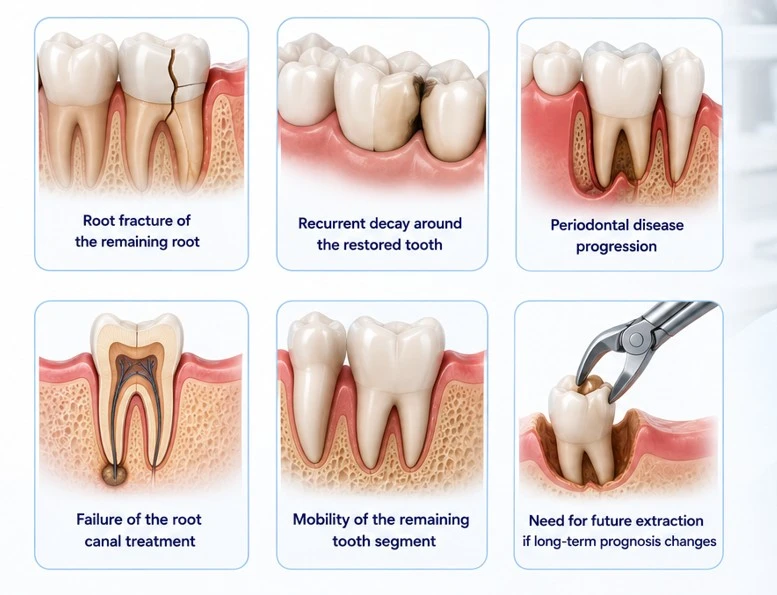
Risks and Limitations of Hemisection
Like all dental procedures, hemisection carries potential risks and limitations, including:
- Root fracture of the remaining root
- Recurrent decay around the restored tooth
- Periodontal disease progression
- Failure of the root canal treatment
- Mobility of the remaining tooth segment
- Need for future extraction if long-term prognosis changes
Your dentist will carefully evaluate whether hemisection is an appropriate treatment option based on the condition of the tooth, supporting bone, gum health, and overall oral health.
Long-Term Success of Hemisection
Long-term success depends on:
- Proper case selection
- Excellent oral hygiene
- Successful root canal treatment
- Good periodontal maintenance
- Proper restorative rehabilitation
Clinical studies and case reports show that hemisection can have favorable survival in carefully selected and well-maintained cases, but long-term outcomes vary between patients.
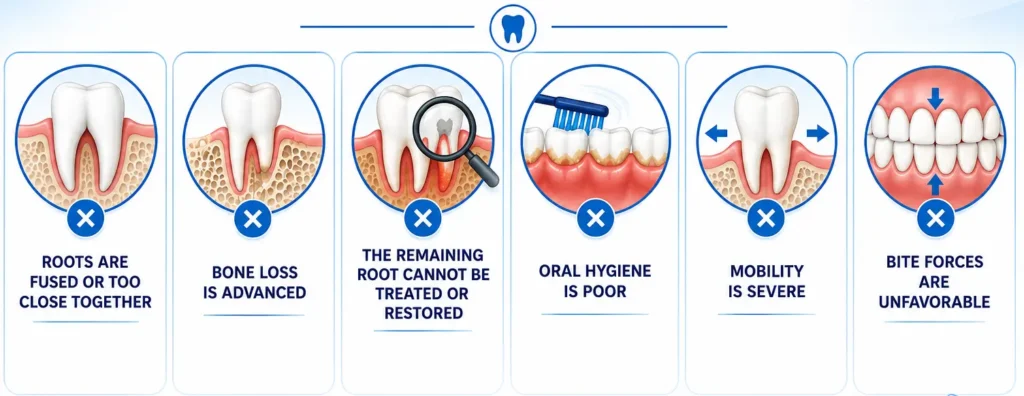
Who May Not Be Suitable for Hemisection?
Hemisection may not be recommended when roots are fused or too close together, bone loss is advanced, the remaining root cannot be treated or restored, oral hygiene is poor, mobility is severe, or bite forces are unfavorable.
Advanced Restorative Care at Green Park Dental Hospital
We provide comprehensive tooth preservation and restorative treatments using advanced technology:
- Digital dental imaging
- CBCT-guided diagnosis
- Precision root canal therapy
- Advanced restorative dentistry
- Crown & bridge rehabilitation
- Periodontal management
- Implant rehabilitation planning
These technologies improve treatment precision, comfort, and long-term stability.
Modern Advances in Hemisection Treatment
Recent advances in dental technology have improved diagnosis, treatment planning, and restoration of hemisected teeth.
Modern tools may include:
- CBCT (Cone Beam Computed Tomography) for three-dimensional evaluation
- Digital dental imaging
- Magnification-assisted endodontics
- Advanced bioceramic root canal materials
- Digital crown and bridge design
- Comprehensive periodontal treatment planning
These technologies help clinicians assess whether hemisection is a predictable long-term treatment option for individual patients.
Why Choose Green Park Dental Hospital for Hemisection?
Patients trust Green Park Dental Hospital for advanced restorative and surgical dental care because we focus on preserving natural teeth whenever possible.
Why choose us:
- Expertise in conservative tooth preservation
- Advanced restorative dentistry
- Precision surgical techniques
- Digital diagnostic technology
- Personalized rehabilitation planning
- Comfortable and hygienic environment
- Comprehensive periodontal & restorative care
- Expertise in implants & full mouth rehabilitation
Our advanced restorative procedures are guided by Dr. Syed Arshad Javeed, known for advanced smile rehabilitation and restorative dentistry.
(FAQ) Frequently Asked Questions
Book Your Hemisection Consultation in Hyderabad
Preserve your natural tooth with advanced Hemisection treatment at Green Park Dental Hospital. Whether you have severe root damage, localized periodontal disease, or a compromised molar, our experienced dental team is here to provide personalized tooth preservation solutions.
Schedule your consultation today with Dr. Syed Arshad Javeed and experience advanced conservative dentistry focused on preserving your natural smile.















Oxmox advised her not to do so, because there were thousands of bad Commas, wild Question Marks and devious.
Kolis Muller NY Citizen