Gentle & Comprehensive Pediatric Dental Care for Healthy Growing Smiles
At Green Park Dental Hospital, we provide specialized Kids Dentistry services focused on preventive, restorative, and developmental dental care for infants, children, and teenagers. Pediatric dental care plays a vital role in maintaining healthy teeth, proper jaw development, and positive oral habits from an early age.
Children require specialized dental attention because their teeth, gums, jaws, and oral habits continue to develop throughout childhood. Early dental care helps prevent cavities, detect developmental issues, and build confidence for lifelong oral health.
Our child-friendly dental treatments are guided by Dr. Syed Arshad Javeed, known for advanced restorative dentistry, smile rehabilitation, and patient-focused dental care.
What Is Kids Dentistry?
Kids Dentistry, also known as Pediatric Dentistry, focuses on the oral health of children from infancy through adolescence. Pediatric dental care includes preventive treatments, cavity management, growth monitoring, habit correction, orthodontic guidance, and education for healthy oral development.
Children’s dental care is important for:
- Healthy tooth eruption
- Jaw development
- Proper chewing and speech
- Preventing cavities
- Maintaining oral hygiene habits
- Monitoring bite and alignment
Why Is Pediatric Dental Care Important?
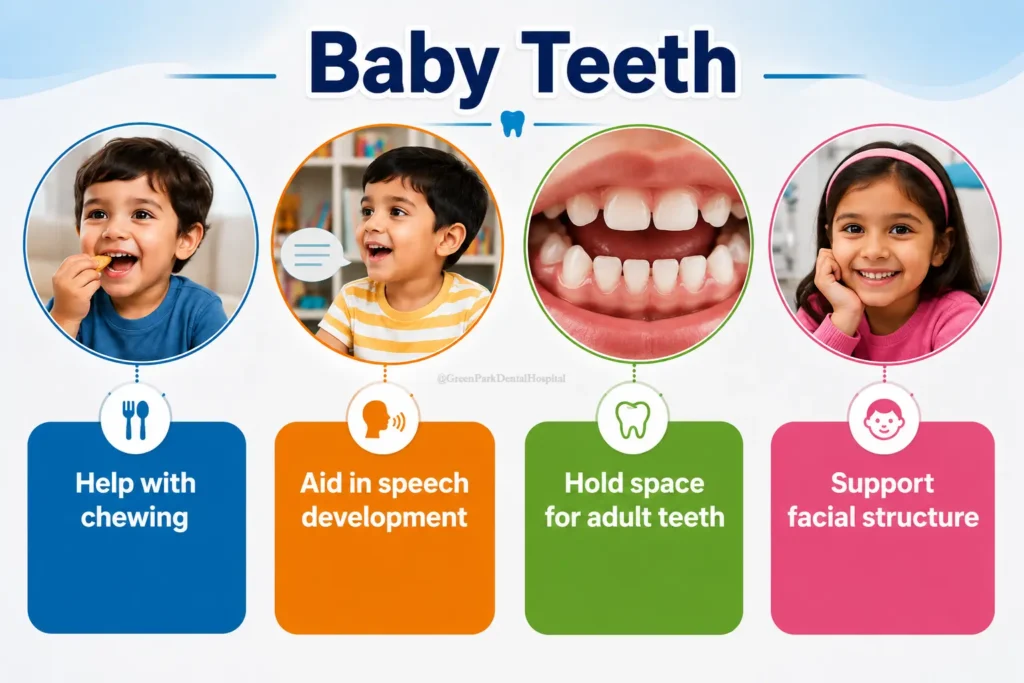
Baby teeth play a critical role in:
- Chewing food properly
- Speech development
- Guiding permanent teeth eruption
- Maintaining facial growth
- Preserving space for adult teeth
Untreated dental problems in children may lead to pain, infection, speech difficulties, and future orthodontic complications.
When Should a Child Visit the Dentist?
Children should ideally have their first dental visit:
- By their first birthday, or
- Within six months after the first tooth erupts
Early dental visits help identify:
- Cavities
- Teething issues
- Feeding concerns
- Oral habits
- Jaw development problems
Regular dental checkups help maintain healthy growth and oral hygiene.
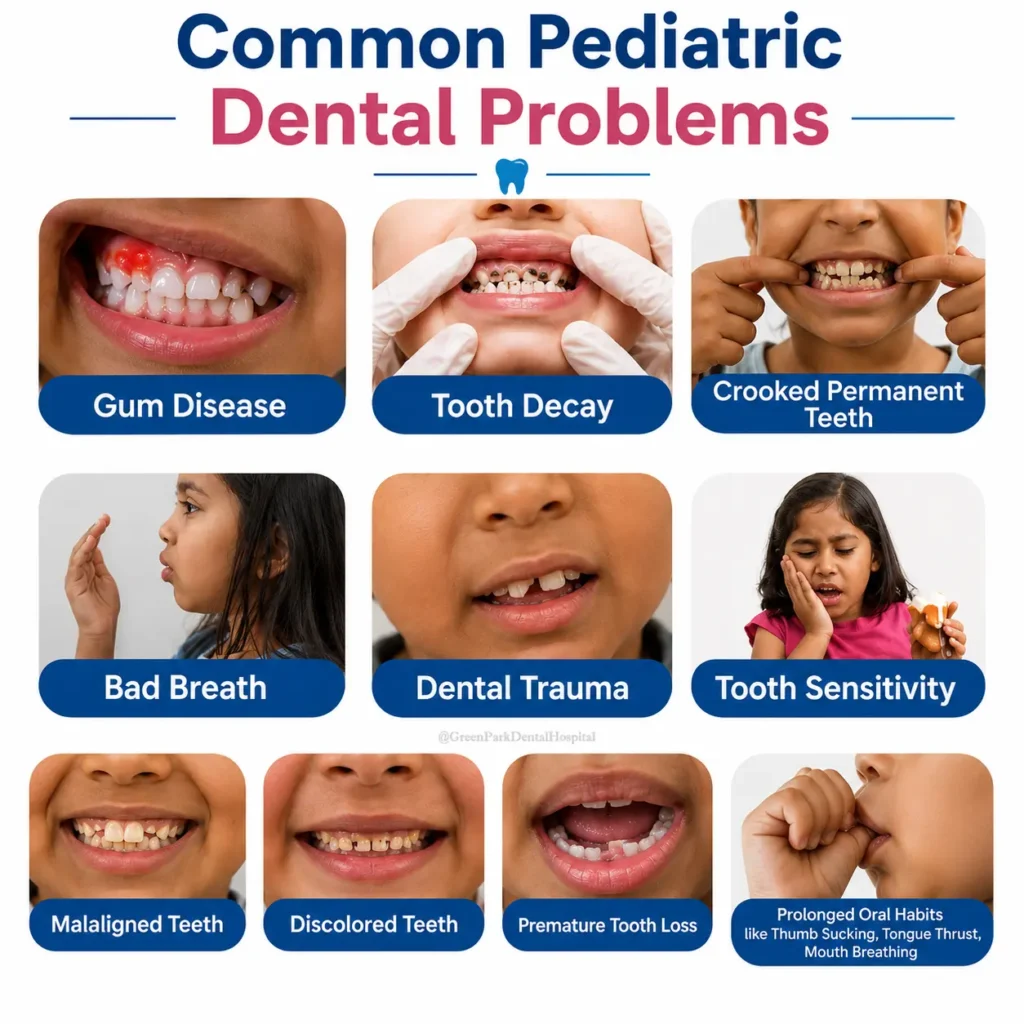
Common Pediatric Dental Problems
Dental Cavities in Children
Tooth decay is one of the most common childhood dental problems.
Causes:
- Sugary foods and drinks
- Poor oral hygiene
- Bottle feeding habits
- Frequent snacking
Signs:
- Tooth pain
- Brown or white spots
- Sensitivity
- Difficulty eating
Emergency Pediatric Dental Care
We provide prompt treatment for:
- Tooth injuries
- Chipped teeth
- Dental trauma
- Knocked-out teeth
- Soft tissue injuries
- Dental pain and swelling
Management of Dental Anxiety in Children at Green Park Dental Hospital
Our child-friendly approach includes:
- Tell-Show-Do technique
- Positive reinforcement
- Behavior guidance
- Distraction techniques
- Comfortable treatment environment
Early Childhood Caries (Baby Bottle Tooth Decay)
Frequent bottle feeding with milk or sugary liquids may increase cavity risk in young children. Early Childhood Caries (ECC) is a severe form of tooth decay affecting infants and young children, often associated with frequent exposure to sugary liquids, prolonged bottle feeding, and inadequate oral hygiene.
Thumb Sucking & Oral Habits
Prolonged thumb sucking or pacifier use may affect:
- Jaw development
- Bite alignment
- Tooth positioning
Teeth Grinding in Children
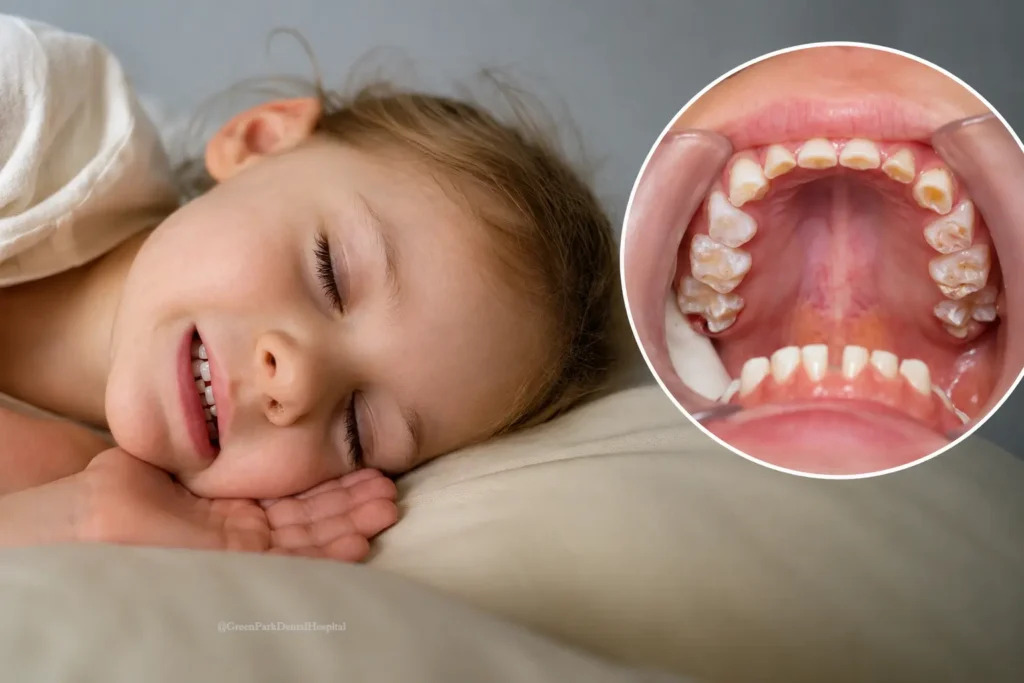
Some children may grind their teeth during sleep, causing tooth wear and jaw strain. Teeth grinding (bruxism) is relatively common in children and often improves with age. Persistent or severe bruxism may contribute to tooth wear, jaw discomfort, headaches, or disturbed sleep and should be evaluated by a pediatric dentist.
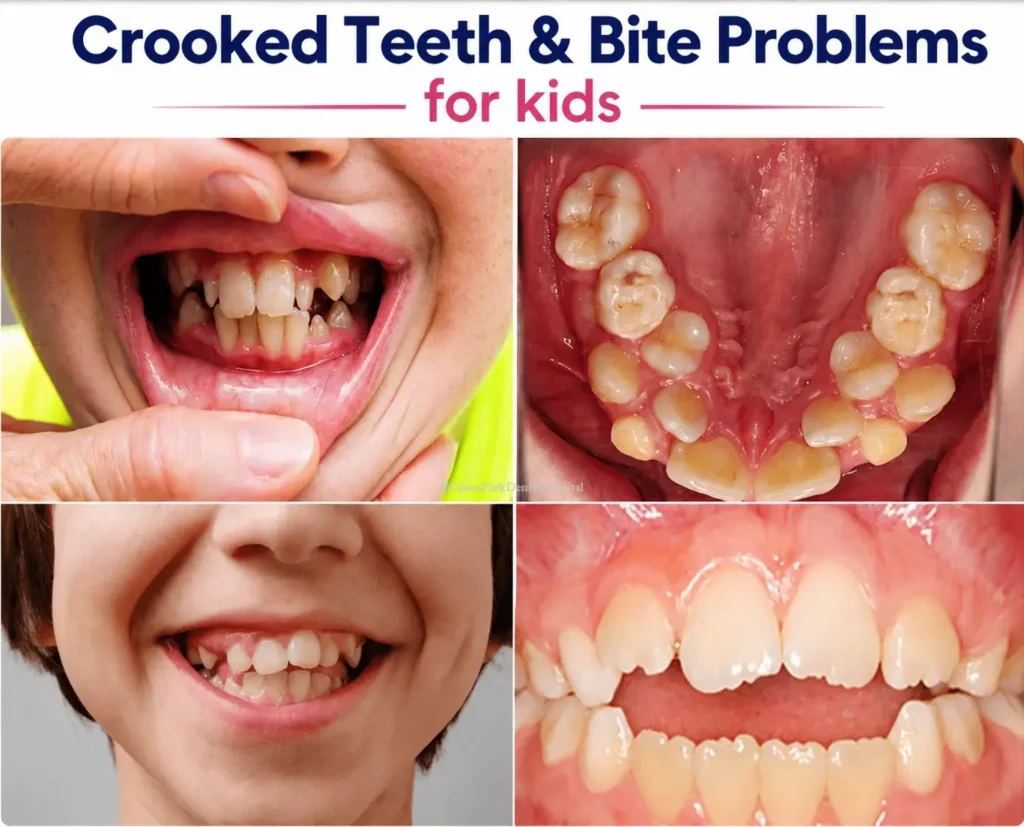
Crooked Teeth & Bite Problems
Children may develop:
- Crowding
- Spacing
- Crossbite
- Open bite
- Overbite
Early orthodontic evaluation helps monitor jaw growth and alignment.
Pediatric Dental Treatments Available
Preventive Dental Checkups
Regular examinations help monitor oral growth and prevent dental problems.
Benefits:
- Early cavity detection
- Oral hygiene guidance
- Growth monitoring
- Preventive care
Fluoride Treatment
Professional fluoride applications help strengthen enamel and reduce cavity risk.
Dental Sealants
Sealants are protective coatings applied to chewing surfaces of teeth to reduce cavity formation.
Benefits:
- Prevents food trapping
- Protects molars from decay
- Long-lasting preventive protection
Tooth-Colored Fillings
Children with cavities may require aesthetic fillings to restore teeth safely and comfortably.
Pediatric Root Canal Treatment (Pulpectomy/Pulpotomy)
When cavities reach the nerve, specialized pediatric pulp therapy may help save the tooth.
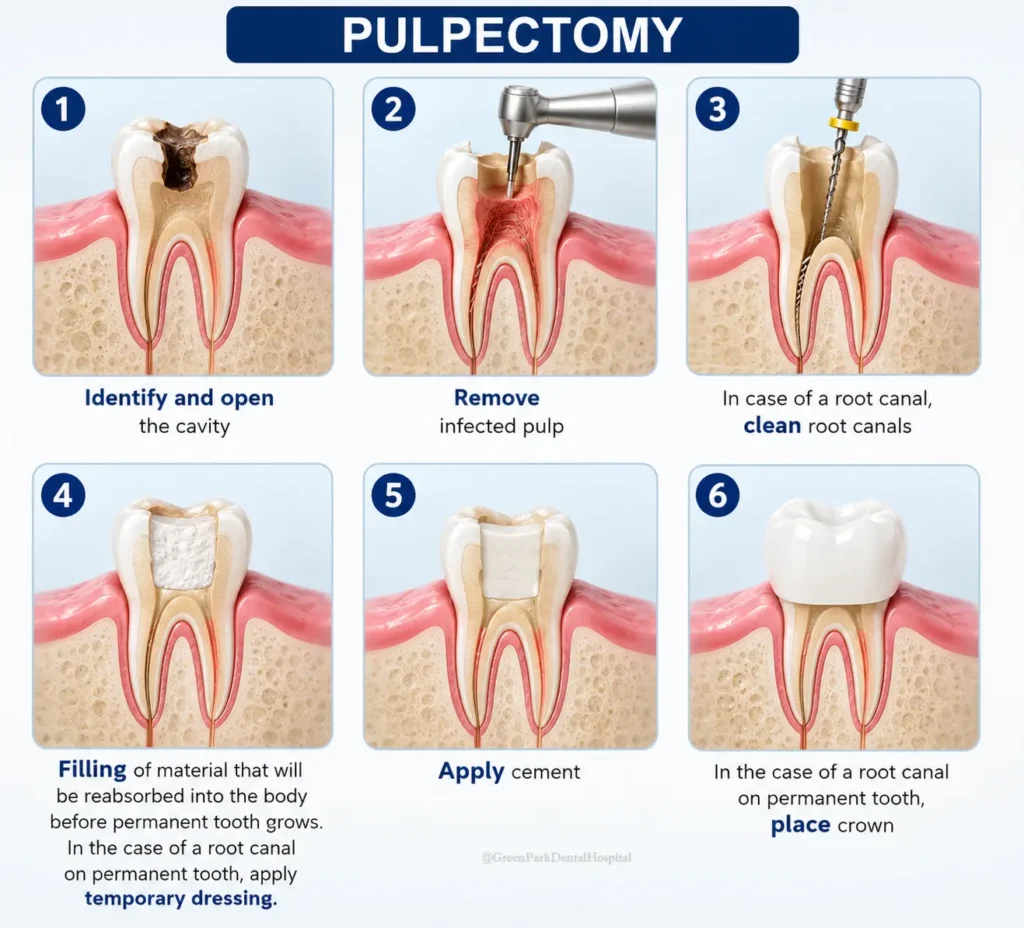
Pulpectomy and Pulpotomy in Children (Pediatric Root Canal Treatments)
What Are Pulpotomy and Pulpectomy?
Pulpotomy and pulpectomy are pediatric pulp therapies performed to save severely decayed or infected baby teeth. These treatments help maintain the tooth until its natural shedding time, preserving chewing function, speech development, and space for permanent teeth.
Pulpotomy (Partial Pulp Treatment)
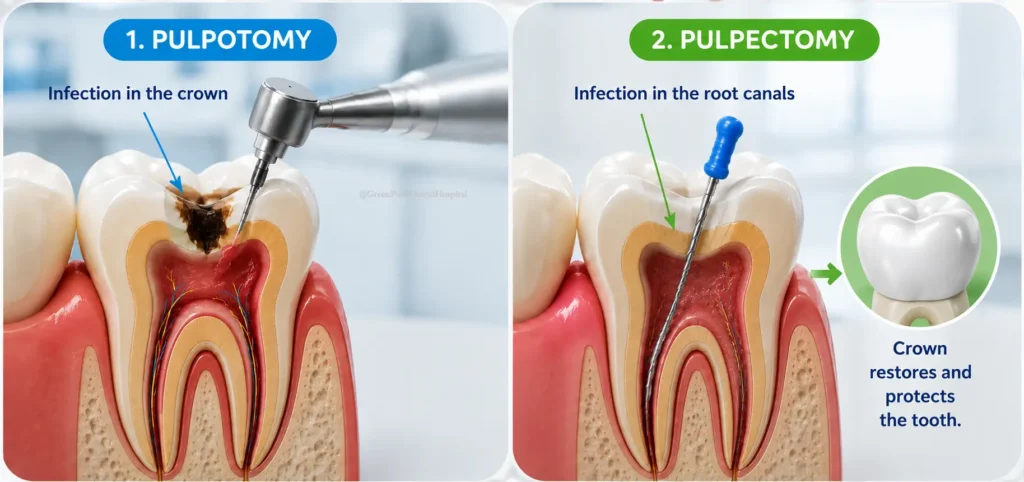
A pulpotomy is a treatment where the infected or inflamed pulp tissue is removed only from the crown (upper portion) of the baby tooth, while the healthy pulp inside the roots is preserved.
When is a Pulpotomy Needed?
- Tooth sensitivity or occasional pain without severe infection
- Deep cavities have reached the pulp but the infection is limited to the crown portion of the tooth.
- The root pulp remains healthy and unaffected.
- The child has mild or occasional pain, usually triggered by food or temperature.
- There is no swelling, abscess, or severe infection around the tooth.
- The tooth has enough healthy structure remaining and can be restored with a crown.
- The baby tooth needs to be preserved until its normal shedding time.
- Accidental exposure of the pulp during cavity removal
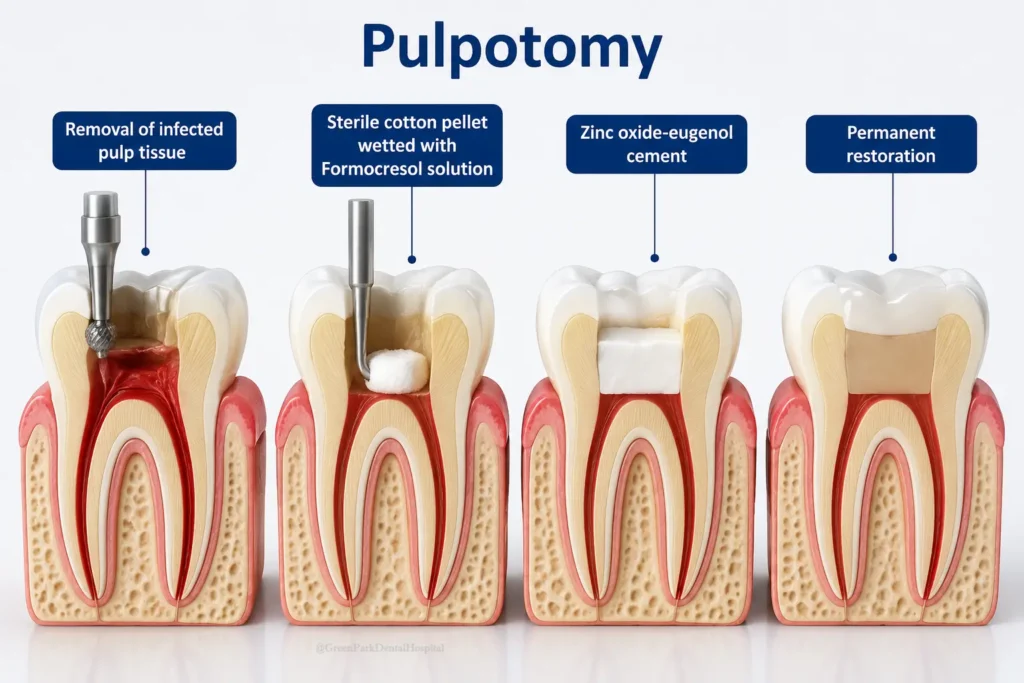
Procedure
- The decayed portion of the tooth is removed.
- The infected pulp from the crown is cleaned.
- A medicated material is placed to protect the remaining healthy pulp.
- The tooth is restored, usually with a stainless steel crown (SS crown) for strength and long-term protection.
Benefits
- Preserves the natural baby tooth
- Maintains normal chewing and speech
- Prevents early tooth loss
- Allows normal jaw and permanent tooth development
Pulpectomy (Complete Pulp Treatment)
A pulpectomy is performed when the infection has spread into the entire pulp, including the root canals. The complete infected pulp is removed from both the crown and roots, and the canals are cleaned, disinfected, and filled with a child-friendly resorbable material.
When is a Pulpectomy Needed?
- Extensive tooth decay involving the entire pulp
- Infection extending into the root canals
- Trauma causing pulp damage
- There is persistent or spontaneous tooth pain, especially pain that occurs without stimulation.
- The child has swelling, pus discharge, or a dental abscess indicating deeper infection.
- The pulp tissue is irreversibly damaged due to severe decay or dental trauma.
- The root canals can be adequately cleaned and the tooth can be restored.
- Maintaining the baby tooth is important for chewing, speech, and preserving space for the permanent tooth.
Procedure
- The decayed and infected pulp is completely removed.
- The root canals are cleaned and disinfected.
- The canals are filled with a resorbable material suitable for baby teeth.
- The tooth is restored, commonly with a stainless steel crown (SS crown) or a zirconia crown (white crown).
Benefits
- Eliminates infection and relieves pain
- Saves the baby tooth until natural exfoliation
- Prevents spread of infection
- Maintains proper spacing for permanent teeth
- Restores normal function and appearance
Simple Difference:
- Pulpotomy: Chosen when the infection is limited to the top (crown) part of the nerve, and the root portion is still healthy.
- Pulpectomy: Chosen when the infection has spread to the entire nerve tissue, including the roots and complete removal of the pulp is required.
Crowns for Children (Pediatric Dental Crowns)
What Are Pediatric Crowns?
Pediatric crowns are protective caps placed over damaged, decayed, or treated baby teeth to restore their strength, function, and appearance. They are commonly used when a tooth has extensive decay, has undergone pulp therapy (pulpotomy/pulpectomy), has developmental defects, or is at risk of fracture.
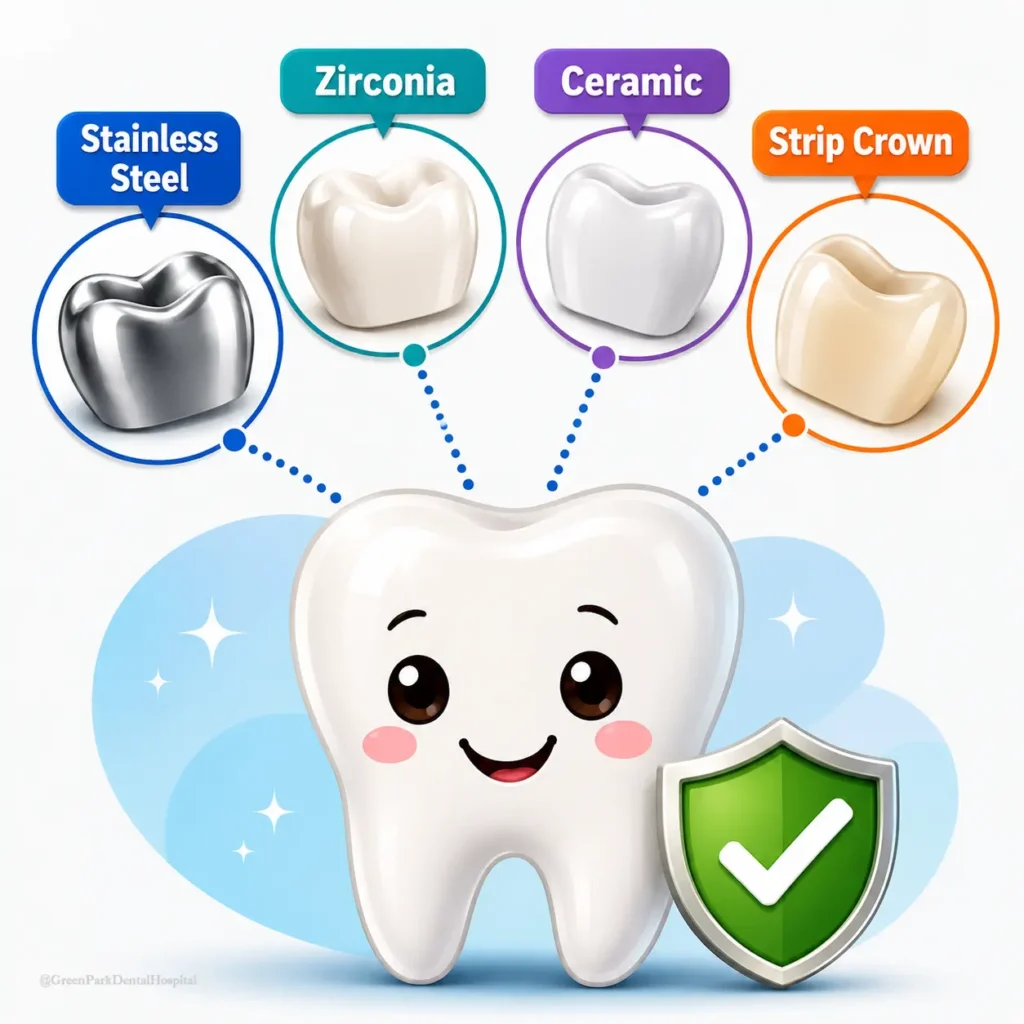
Types of Crowns Used in Children
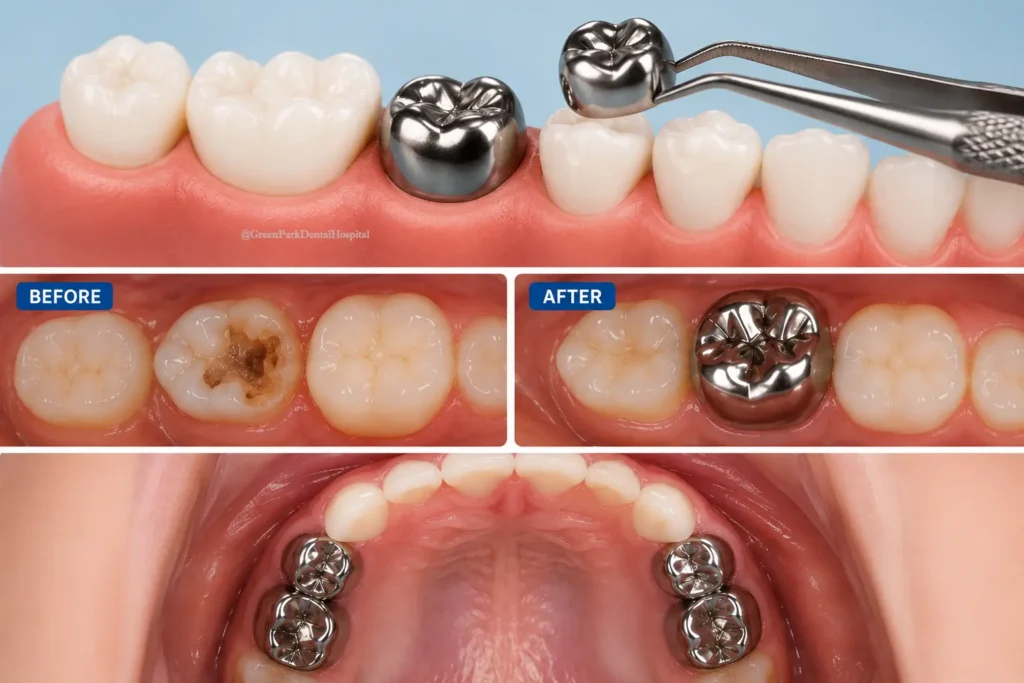
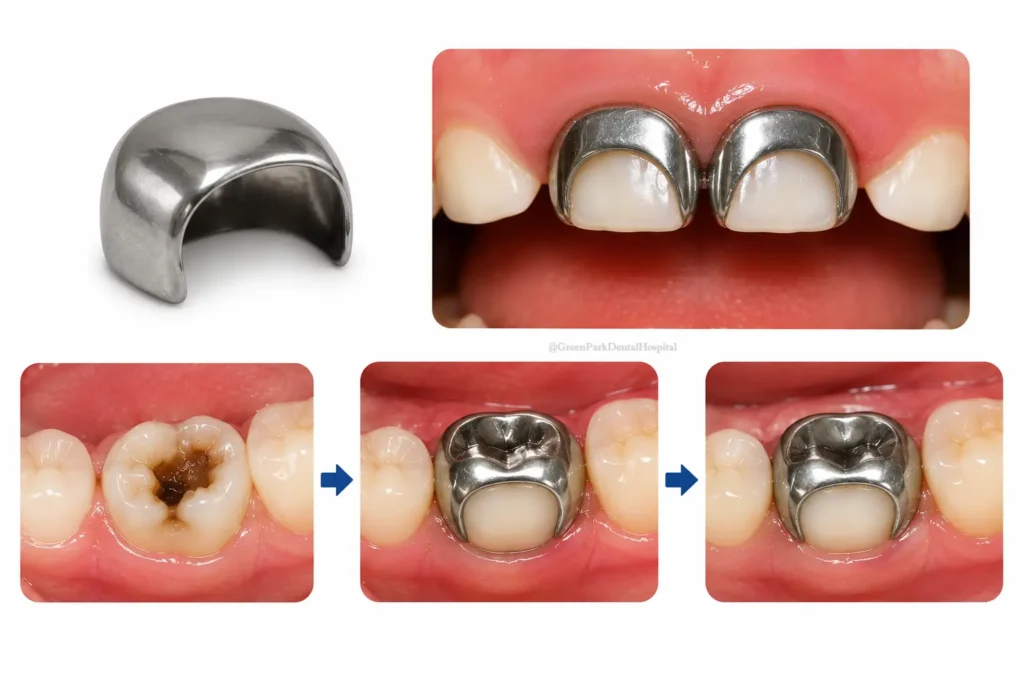
1. Stainless Steel Crowns (SS Crowns)
What Are They?
Durable metal crowns commonly used for restoring back baby teeth.
When Are They Used?
- Large cavities with significant tooth loss
- After pulpotomy or pulpectomy
- Weak or defective enamel
- Teeth at high risk of fracture
Benefits
- Highly durable and long-lasting
- Excellent protection against further decay
- Cost-effective
- High success rate
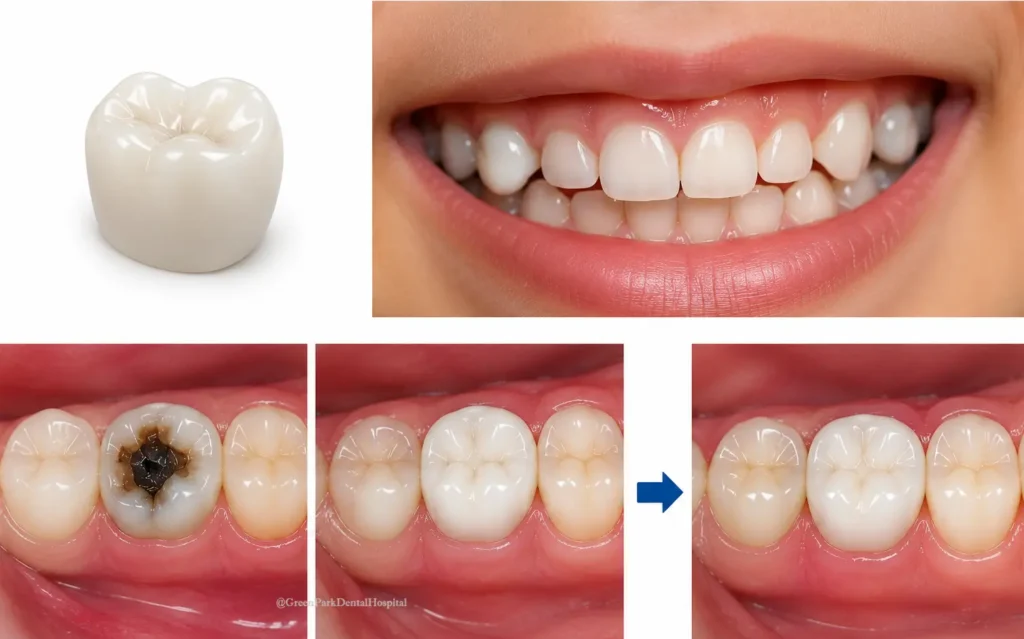
2. Zirconia Crowns (White Crowns)
What Are They?
Tooth-colored ceramic crowns that provide a natural-looking and metal-free restoration.
When Are They Used?
- Extensive decay in front or back teeth
- After pulp therapy when aesthetics are important
- Children requiring an aesthetic full-coverage restoration
Benefits
- Natural tooth-like appearance
- Metal-free and biocompatible
- Strong and stain-resistant
- Smooth surface with reduced plaque accumulation
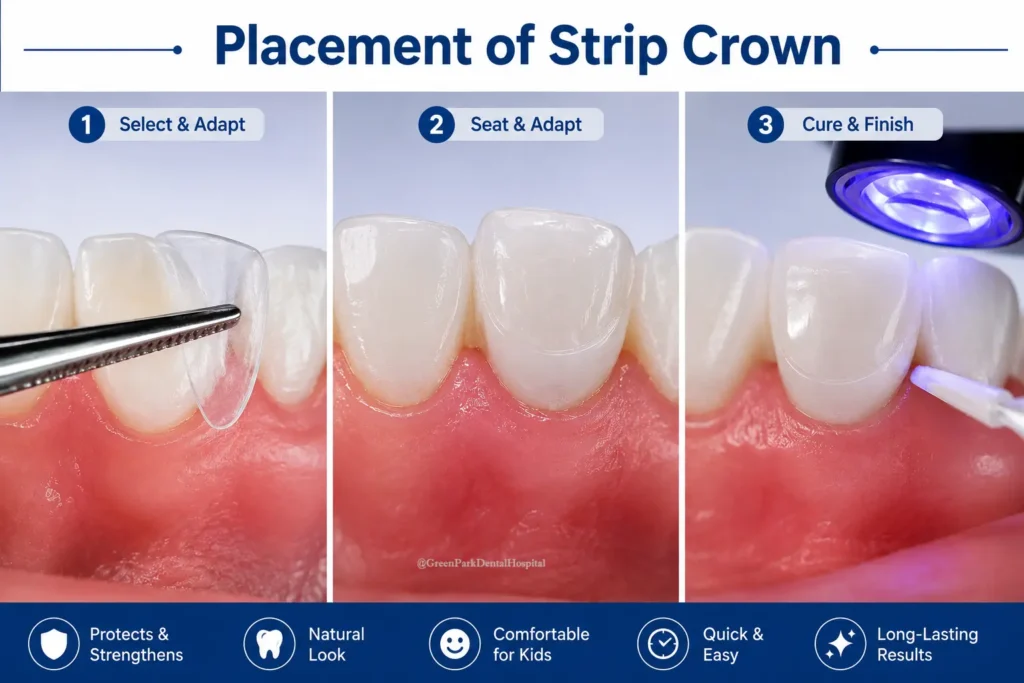
3. Strip Crowns (Aesthetic Resin Crowns)
What Are They?
Clear crown forms filled with tooth-colored composite resin, commonly used for restoring front baby teeth.
When Are They Used?
- Decayed or fractured front teeth
- Early childhood caries affecting anterior teeth
- Cases where excellent aesthetics are required
Benefits
- Excellent natural appearance
- Matches the color of adjacent teeth
- Conservative and aesthetic restoration
4. Open-Faced Stainless Steel Crowns
What Are They?
Stainless steel crowns with a tooth-colored resin facing on the front surface to improve appearance.
When Are They Used?
- Front baby teeth requiring more strength than strip crowns
- Children needing a balance between durability and aesthetics
Benefits
- Stronger than composite restorations
- Improved appearance compared to conventional SS crowns
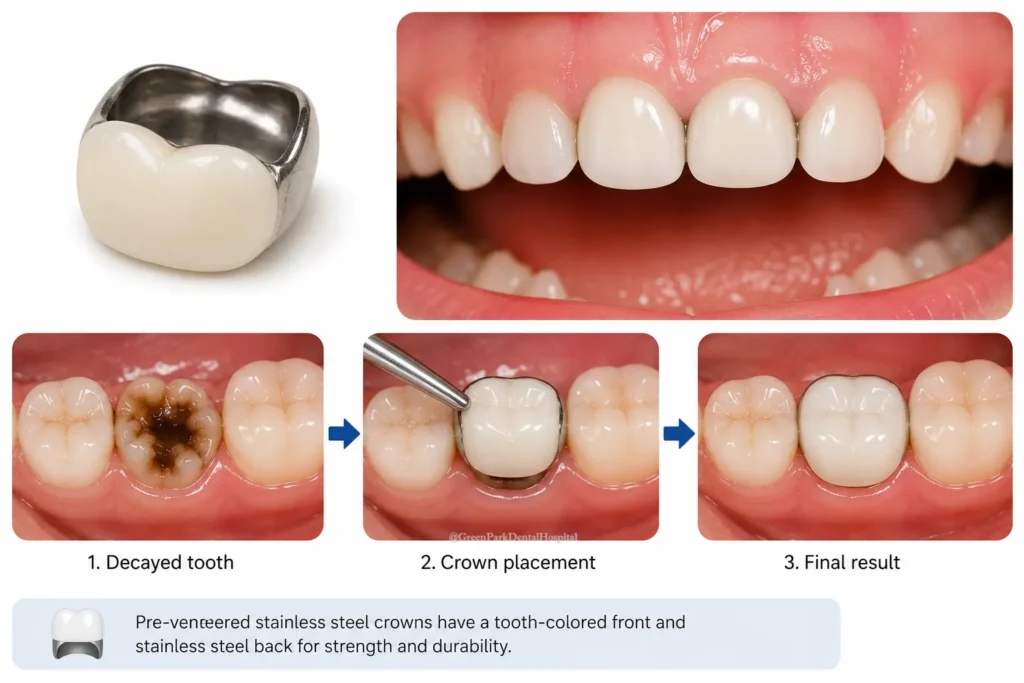
5. Pre-veneered Stainless Steel Crowns
What Are They?
Stainless steel crowns with a bonded tooth-colored aesthetic coating on the visible surface.
When Are They Used?
- Front primary teeth with extensive decay
- Children requiring durable yet aesthetic restorations
Benefits
- Better aesthetics than metal crowns
- Greater durability compared to strip crowns
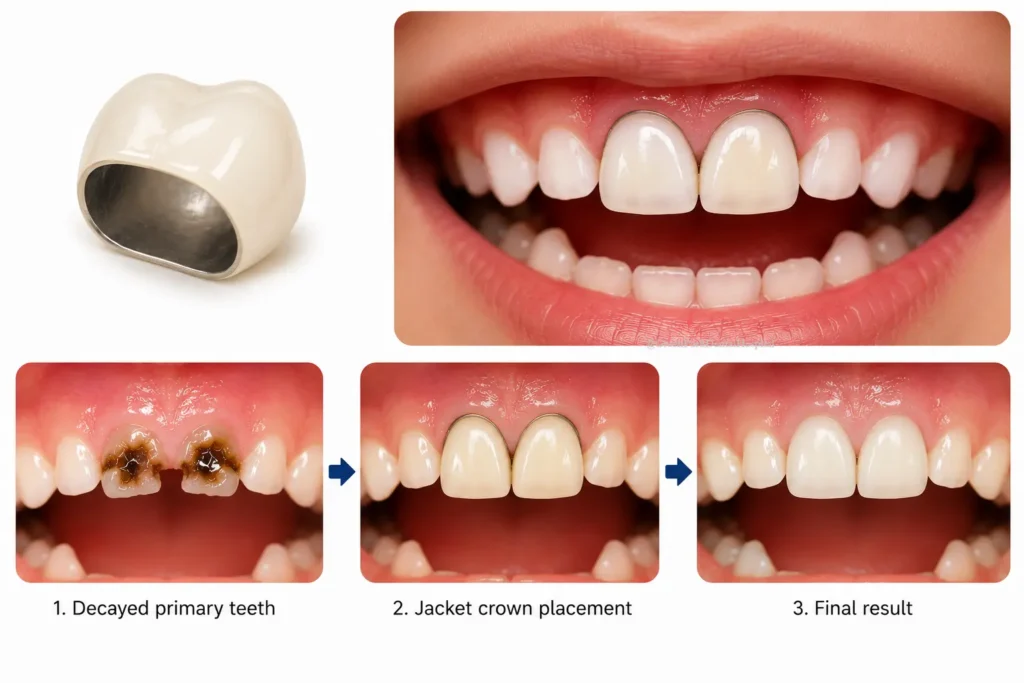
Jacket Crowns for Children
What Are Jacket Crowns?
Jacket crowns are tooth-colored full-coverage crowns used to restore damaged front baby teeth. They are usually made from composite resin or acrylic materials and are designed to provide a natural appearance by covering the entire visible portion of the tooth.
When Are Jacket Crowns Used?
- Extensive decay in front primary teeth.
- Teeth affected by early childhood caries (baby bottle tooth decay).
- Fractured or worn front teeth.
- Teeth requiring an aesthetic restoration after pulp therapy (pulpotomy or pulpectomy).
- Children where maintaining a natural smile is a priority.
Benefits of Jacket Crowns
- Excellent tooth-colored aesthetics.
- Natural-looking appearance.
- Conservative compared to some other full-coverage options.
- Helps restore normal appearance, speech, and function.
- Can be matched to the shade of surrounding teeth.
Limitations
- Less durable than stainless steel and zirconia crowns.
- More prone to chipping, staining, and wear over time.
- May have a shorter lifespan in children with heavy bite forces or poor oral habits.
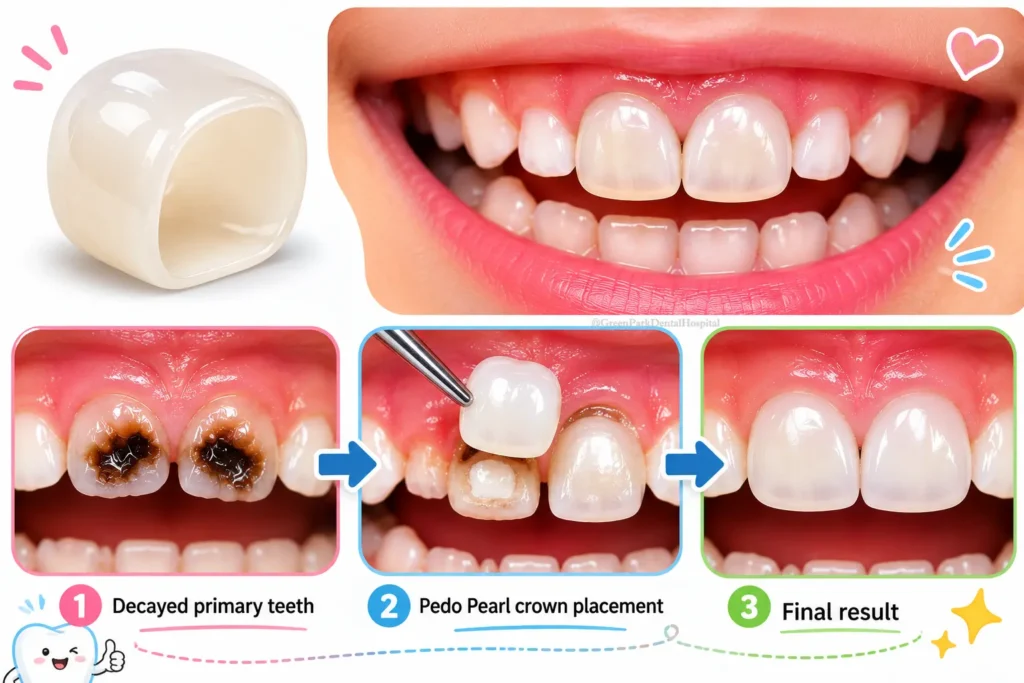
Pedo Pearls Crowns for Children
What Are Pedo Pearls Crowns?
Pedo Pearls crowns are aesthetic pediatric crowns made from durable tooth-colored composite resin. They are designed to restore damaged or decayed primary teeth, especially front teeth, while providing a natural appearance.
When Are Pedo Pearls Crowns Used?
- Extensive decay in front baby teeth.
- Early childhood caries (baby bottle tooth decay).
- Fractured or worn primary teeth.
- Teeth requiring aesthetic restoration after pulpotomy or pulpectomy.
- Children and parents seeking a natural-looking alternative to metal crowns.
Benefits of Pedo Pearls Crowns
- Excellent tooth-colored aesthetics.
- Natural-looking smile restoration.
- Prefabricated crowns that can often be placed in a single visit.
- Smooth surface and good polish.
- Comfortable and biocompatible.
Limitations
- Less durable than stainless steel and zirconia crowns.
- May be more prone to chipping or wear over time.
- Requires proper case selection and good oral hygiene for long-term success.
Key Difference
- Pedo Pearls Crowns: Tooth-colored composite crowns offering good aesthetics with easier placement.
- Strip Crowns: Highly aesthetic, custom-shaped composite restorations but more technique-sensitive.
- Zirconia Crowns: Offer superior strength, aesthetics, and stain resistance.
- Stainless Steel Crowns (SS Crowns): Most durable and cost-effective, primarily used for posterior baby teeth.
Choosing the Right Crown
The choice of crown depends on:
- The child’s age and level of co-operation
- Location of the tooth (front or back)
- Extent of tooth damage
- Aesthetic requirements
- Bite forces and oral habits
- Cost and long-term treatment goals
Modern pediatric dentistry offers a variety of crown options, from durable stainless steel crowns to highly aesthetic zirconia and composite-based crowns, allowing customized treatment for each child’s functional and cosmetic needs.
Space Maintainers
Space maintainers help preserve space when baby teeth are lost prematurely.
Space Maintainers in Children
What Are Space Maintainers?
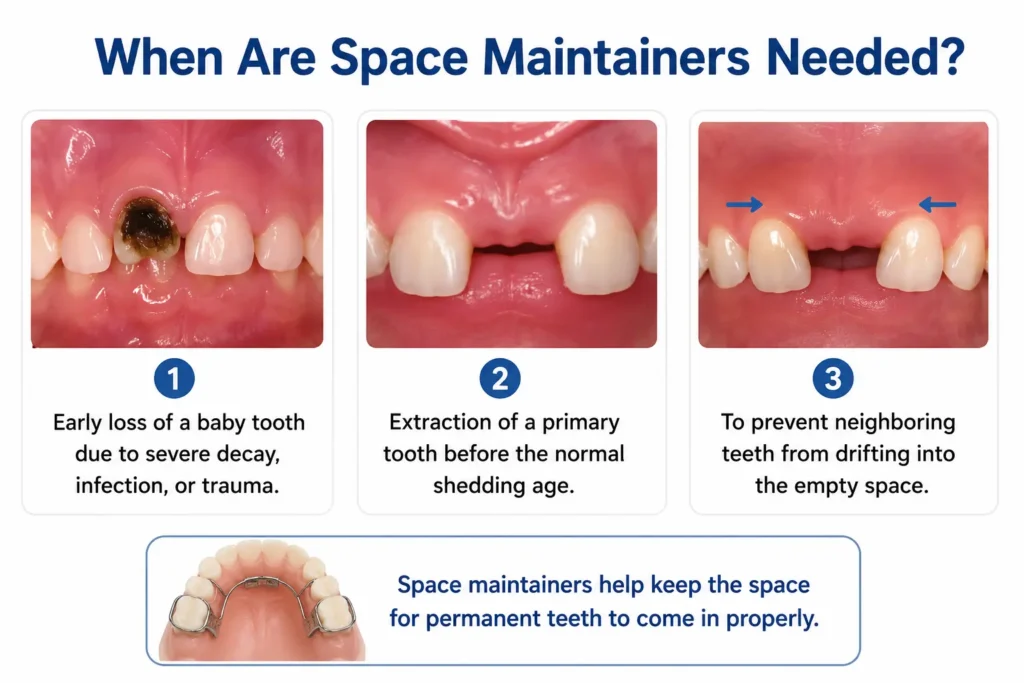
Space maintainers are custom-made dental appliances used to preserve the space left behind when a baby tooth is lost prematurely. They help ensure that the permanent tooth has enough room to erupt in the correct position.
When Are Space Maintainers Needed?
- Early loss of a baby tooth due to severe decay, infection, or trauma.
- Extraction of a primary tooth before the normal shedding age.
- To prevent neighboring teeth from drifting into the empty space.
- When there is a risk of crowding, misalignment, or improper eruption of permanent teeth.
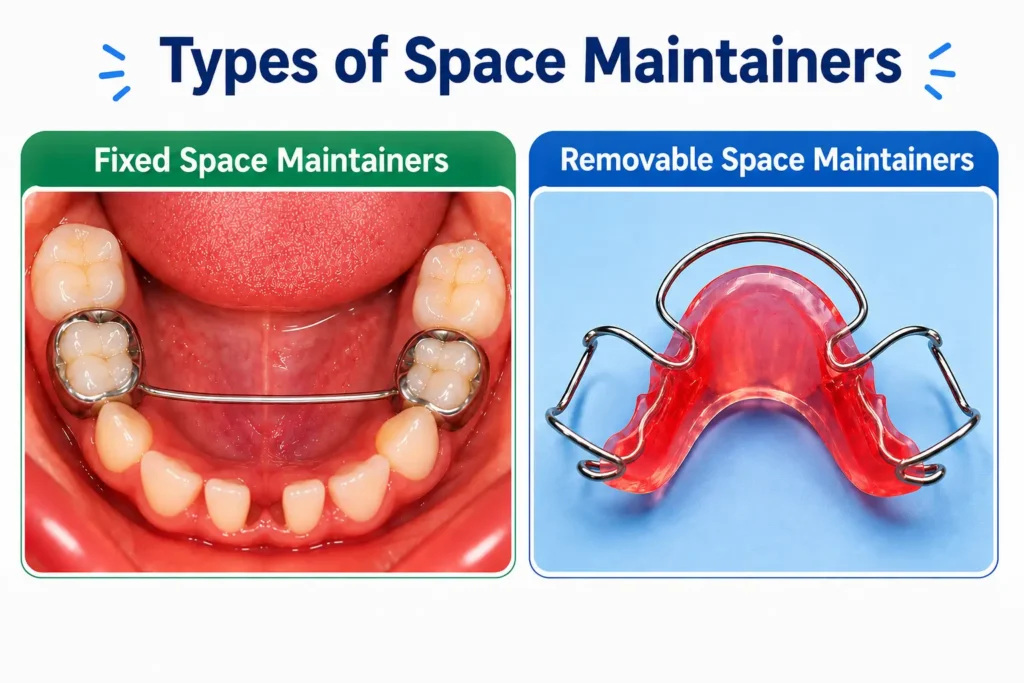
- Fixed Space Maintainers: Cemented appliances attached to adjacent teeth that remain in place until removed by the dentist.
- Removable Space Maintainers: Appliances that can be taken out for cleaning and are used in selected cases.
Benefits of Space Maintainers
- Preserve the natural space for permanent teeth.
- Prevent crowding and bite problems.
- Support proper alignment and jaw development.
- Reduce the likelihood of future orthodontic complications.
Key Point
Space maintainers are recommended only when clinically necessary after evaluating the child’s age, the missing tooth, the stage of permanent tooth development, and the available space in the dental arch.
Early Orthodontic Evaluation
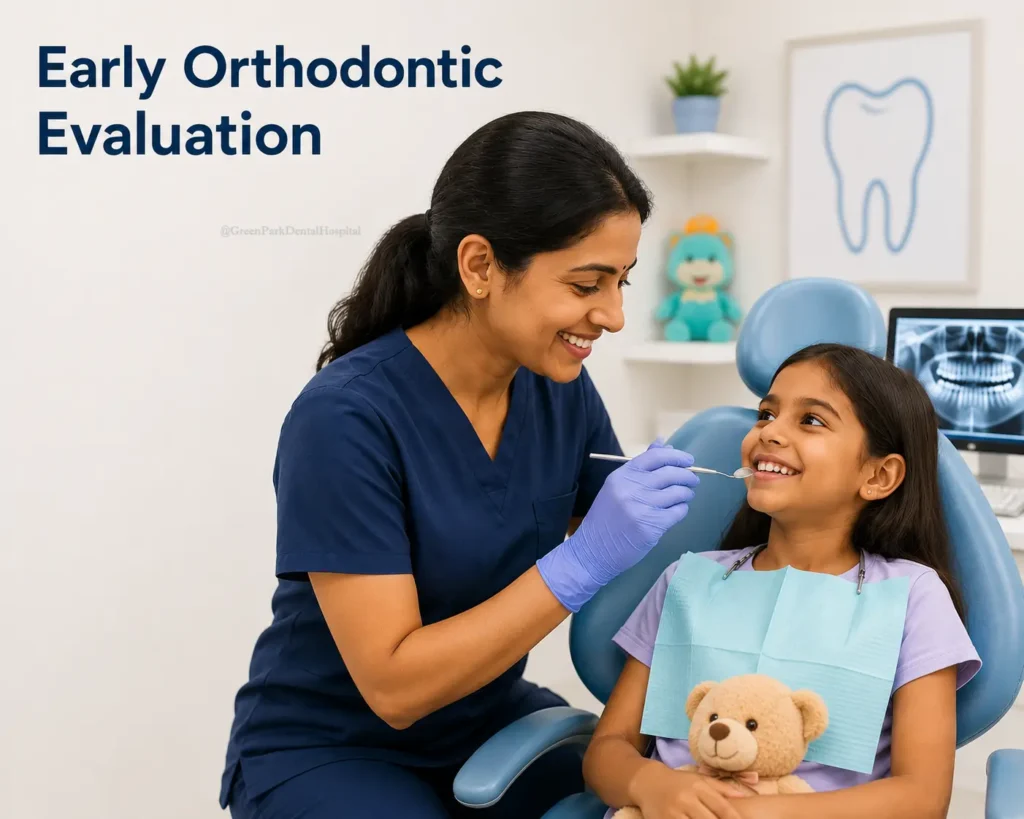
Early orthodontic evaluation refers to the assessment of a child’s developing teeth, jaws, and facial structures at a young age to identify existing or potential orthodontic problems and determine the need and appropriate timing for treatment.
According to the American Association of Orthodontists (AAO), every child should have an initial orthodontic evaluation by around 7 years of age. At this stage, the child usually has a mixed dentition (a combination of primary and permanent teeth), allowing early detection of developing malocclusions.
Objectives of Early Orthodontic Evaluation
- Identify abnormal growth and development of the jaws.
- Detect developing malocclusions and harmful oral habits.
- Assess eruption patterns and available space for permanent teeth.
- Evaluate skeletal and dental relationships.
- Determine the need for interceptive orthodontic treatment.
- Prevent or reduce the severity of future orthodontic problems.
- Guide proper growth and development of the craniofacial structures.
Components of Early Orthodontic Evaluation
1. Medical and Dental History
- Review systemic health, genetic factors, previous dental treatment, and oral habits.
2. Clinical Examination
- Examination of the face, profile, and facial symmetry.
- Assessment of oral habits such as thumb sucking, tongue thrusting, and mouth breathing.
- Evaluation of tooth eruption, occlusion, and alignment.
- Examination of the temporomandibular joint (TMJ) and oral soft tissues.
3. Occlusal Assessment
Assessment includes:
- Molar and canine relationships.
- Overjet and overbite.
- Presence of crossbite, open bite, deep bite, or crowding.
- Midline discrepancies.
- Premature loss or prolonged retention of primary teeth.
4. Radiographic Evaluation
When indicated, radiographs such as:
- Panoramic radiographs to assess tooth development and eruption.
- Cephalometric radiographs to evaluate skeletal relationships.
- Intraoral radiographs for detailed assessment of individual teeth.
5. Diagnostic Records
- Dental impressions or digital scans.
- Clinical photographs.
- Study models for analysis of space and occlusion.
Conditions Detected During Early Evaluation
- Crowding and spacing problems.
- Crossbites.
- Excessive overjet or protruding front teeth.
- Open bite and deep bite.
- Skeletal discrepancies (Class II and Class III malocclusions).
- Eruption abnormalities, impacted or missing teeth.
- Harmful oral habits affecting dental development.
Benefits of Early Orthodontic Evaluation
- Allows timely intervention before problems become severe.
- Improves jaw growth and dental development.
- Reduces the risk of trauma to protruding incisors.
- Creates space for erupting permanent teeth.
- May decrease the complexity and duration of future orthodontic treatment.
- Improves function, esthetics, and self-confidence.
Interceptive Treatments That May Be Recommended
- Space maintainers.
- Habit-breaking appliances.
- Expansion appliances for narrow arches.
- Partial braces.
- Functional appliances to guide jaw growth.
- Extraction of selected primary teeth to guide eruption.
Conclusion
Early orthodontic evaluation is an essential part of pediatric dental care that enables the early detection and management of developing orthodontic problems. Timely assessment (preferably around the age of seven) helps guide normal dental and skeletal development, minimizes future complications, and may reduce the need for extensive orthodontic treatment later in life.
Habit Breaking Appliances in Pediatric Dentistry
Habit breaking appliances are dental devices used in pediatric dentistry to help children discontinue harmful oral habits that can negatively affect the development of teeth, jaws, and oral structures. These appliances are generally indicated when counseling and positive reinforcement fail to eliminate the habit, especially if the habit persists beyond the age when it is considered normal.
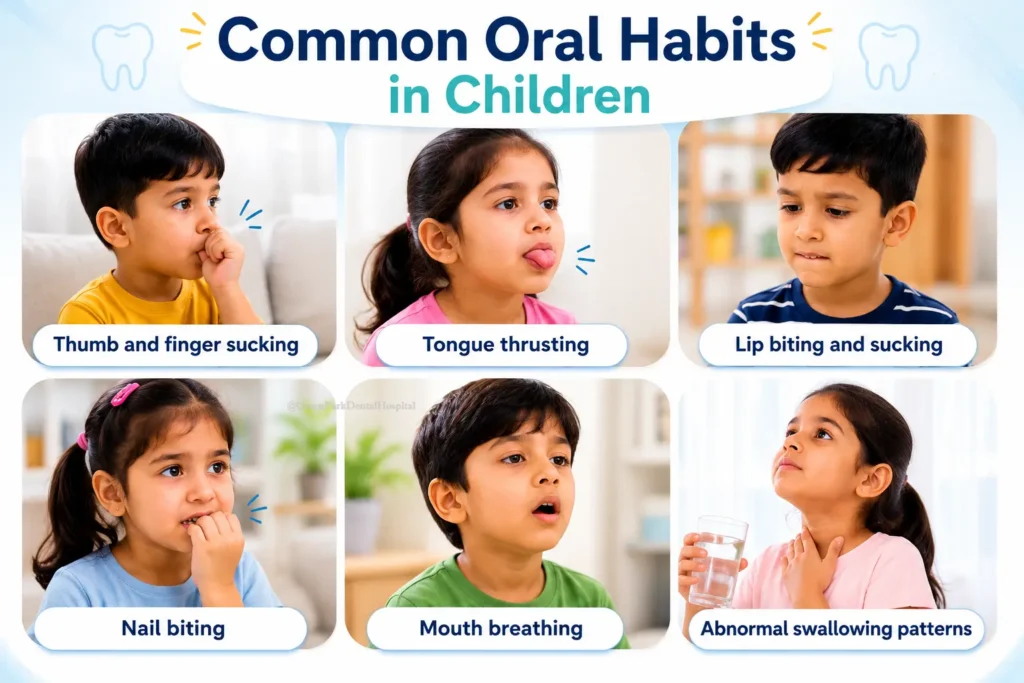
Common Oral Habits in Children
Some common deleterious oral habits include:
- Thumb and finger sucking
- Tongue thrusting
- Lip biting and sucking
- Nail biting
- Mouth breathing
- Abnormal swallowing patterns
Persistent habits can lead to malocclusions such as anterior open bite, increased overjet, posterior crossbite, spacing between teeth, and changes in jaw growth.
What are Habit Breaking Appliances
Habit breaking appliances are fixed or removable orthodontic devices designed to interfere with the performance of harmful oral habits and retrain the muscles involved in normal oral function.
Classification of Habit Breaking Appliances
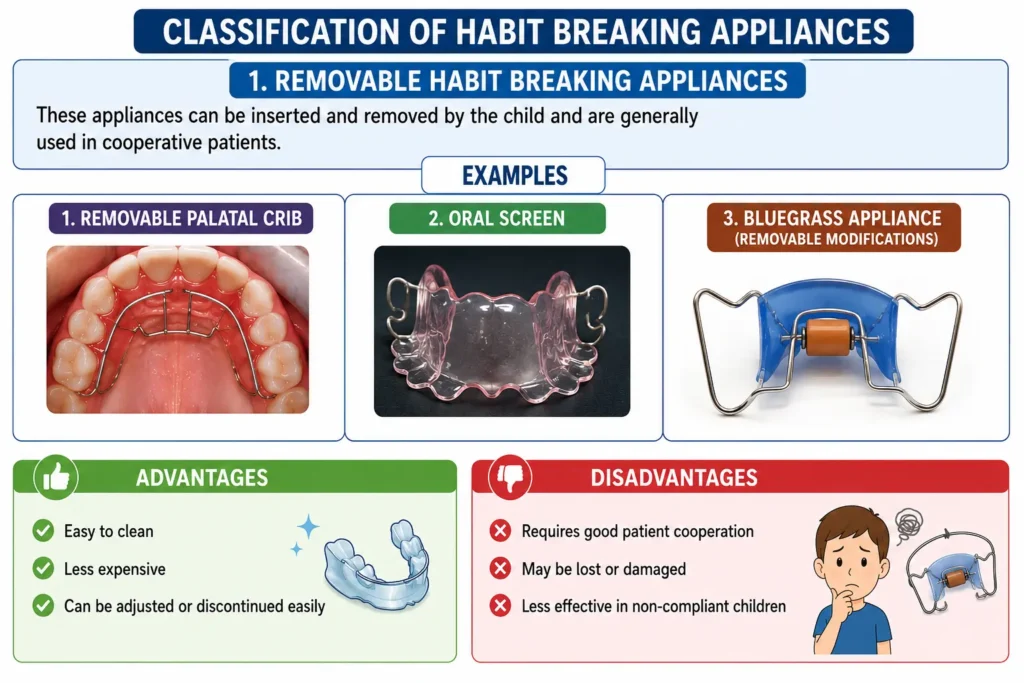
1. Removable Habit Breaking Appliances
These appliances can be inserted and removed by the child and are generally used in cooperative patients.
Examples:
- Removable palatal crib: A wire framework placed behind the upper front teeth to prevent thumb sucking and tongue thrusting.
- Oral screen: A shield-like appliance placed in the vestibule to eliminate lip habits and improve muscle function.
- Bluegrass appliance (removable modifications): Contains a roller that serves as a reminder and provides a harmless alternative activity for the tongue.
Advantages:
- Easy to clean
- Less expensive
- Can be adjusted or discontinued easily
Disadvantages:
- Requires good patient cooperation
- May be lost or damaged
- Less effective in non-compliant children
2. Fixed Habit Breaking Appliances
These appliances are attached to the teeth and provide continuous action, making them useful for children with poor compliance.
Examples:
a) Palatal Crib
- Consists of metal wires attached to bands on the maxillary molars.
- Prevents placement of the thumb against the palate and restricts tongue thrusting.
- Commonly used for thumb sucking and tongue thrusting habits.
b) Bluegrass Appliance
- Contains a Teflon or acrylic roller placed on a wire across the palate.
- The child is encouraged to play with the roller using the tongue instead of sucking the thumb.
- It works by positive reinforcement rather than punishment.
c) Hay Rake Appliance
- Consists of sharp-looking but harmless prongs extending from the palatal area.
- Creates an unpleasant sensation when the thumb is inserted, discouraging thumb sucking.
d) Quad Helix with Crib
- Combines expansion of the maxillary arch with a crib.
- Useful when thumb sucking is associated with posterior crossbite or constricted arches.
e) Tongue Crib and Tongue Bead
- Used for correction of tongue thrusting.
- Help retrain tongue posture and swallowing patterns.
Advantages:
- Does not depend on patient cooperation.
- Provides continuous therapeutic effect.
- Usually more successful in persistent habits.
Disadvantages:
- More difficult to maintain oral hygiene.
- May cause temporary speech difficulty and discomfort.
- Requires professional placement and removal.
Indications
Habit breaking appliances are indicated when:
- The child is unable to stop the habit voluntarily.
- The habit continues beyond 4–5 years of age.
- The habit causes dental or skeletal changes.
- There is a risk of developing malocclusion.
Contraindications
They should be avoided when:
- The child is not psychologically prepared for treatment.
- The habit is due to emotional or psychological stress that has not been addressed.
- The child has poor oral hygiene or active dental disease requiring treatment.
Mechanism of Action
Habit breaking appliances act by:
- Creating a physical barrier that prevents the habit.
- Altering muscle patterns and tongue posture.
- Providing a reminder to the child.
- Redirecting oral activity toward a harmless behavior.
Care and Instructions
- Maintain proper oral hygiene around the appliance.
- Avoid sticky and hard foods with fixed appliances.
- Attend regular dental follow-up appointments.
- Encourage positive reinforcement rather than punishment.
Conclusion
Habit breaking appliances play a vital role in interceptive pediatric orthodontics. They help eliminate harmful oral habits, promote normal oral muscle function, and prevent or reduce developing malocclusions. Selection of an appropriate appliance depends on the child’s age, type and severity of the habit, level of cooperation, and the presence of associated dental changes.
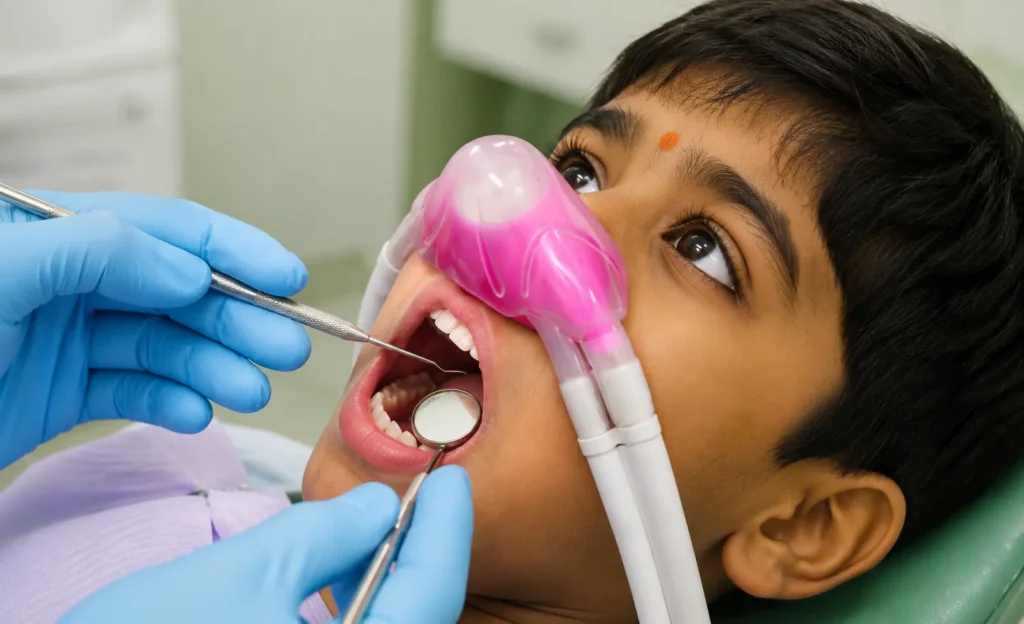
Sedation Dentistry for Children
Sedation dentistry involves the use of safe, carefully monitored medications to help children remain calm, comfortable, and relaxed during dental procedures. It is especially helpful for children who experience dental anxiety, have difficulty cooperating, or require extensive treatment.
Benefits of Early Pediatric Dental Care
Prevents Cavities & Infection
Regular care reduces the risk of tooth decay and pain.
Supports Healthy Jaw Development
Proper monitoring helps guide tooth eruption and facial growth.
Builds Positive Dental Habits
Children learn healthy oral hygiene routines early.
Reduces Dental Anxiety
Child-friendly dental visits improve comfort and confidence.
Encourages Lifelong Oral Health
Early preventive care supports healthier permanent teeth.
Child-Friendly Dental Care at Green Park Dental Hospital
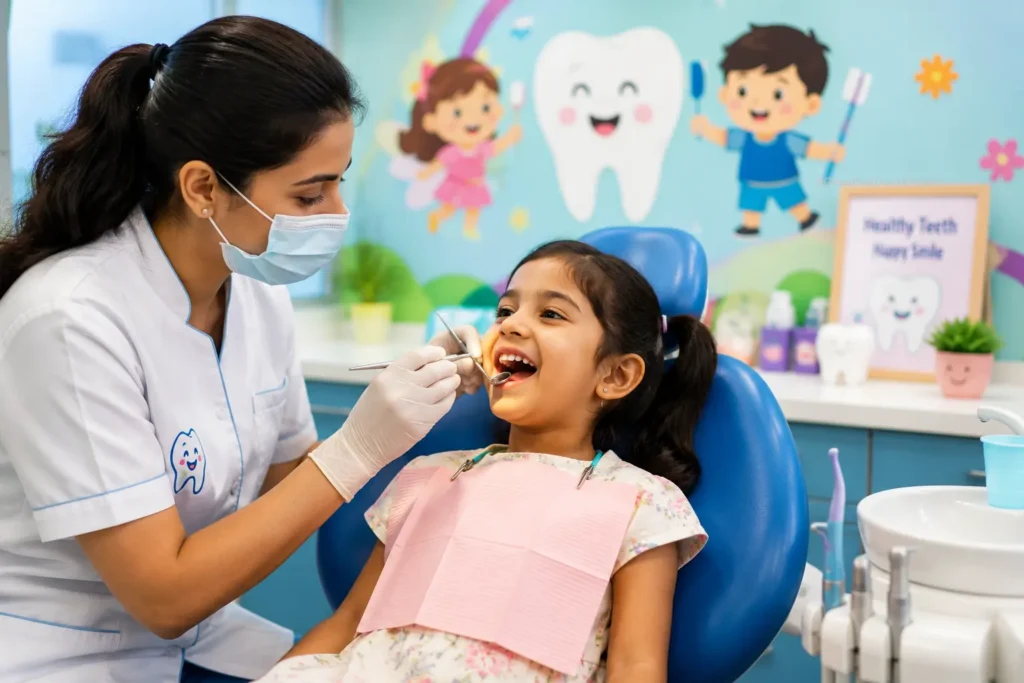
At Green Park Dental Hospital, we focus on making children feel safe, comfortable, and relaxed during dental visits.
Our pediatric approach includes:
- Gentle dental techniques
- Child-friendly communication
- Comfortable clinical environment
- Preventive oral education
- Personalized treatment planning
We aim to create positive dental experiences that encourage healthy oral habits for life.
Oral Care Tips for Children
Parents can help maintain healthy teeth by:
Important Dental Care Habits:
- Brushing twice daily
- Supervising brushing in young children
- Limiting sugary snacks and drinks
- Encouraging healthy eating habits
- Scheduling regular dental checkups
- Using fluoride toothpaste appropriately
Good oral hygiene habits established early often continue into adulthood.
Modern Advances in Pediatric Dentistry
Silver Diamine Fluoride (SDF) Therapy
Silver Diamine Fluoride is a minimally invasive treatment used to help arrest early tooth decay without drilling in selected cases. It is particularly beneficial for young children, anxious patients, and those with early childhood caries.
Benefits:
- Non-invasive treatment
- No drilling required
- Helps slow or stop cavity progression
- Useful for very young children
Minimally Invasive Pediatric Dentistry
Modern pediatric dentistry focuses on preserving healthy tooth structure whenever possible through minimally invasive techniques and preventive care.
Examples include:
- Early cavity detection
- Fluoride therapies
- Sealants
- Preventive restorations
- Selective caries removal
Hall Technique for Primary Molars
In selected cases, pediatric dentists may manage cavities in baby molars using the Hall Technique, where a preformed crown is placed without conventional drilling. This child-friendly approach can improve comfort and treatment acceptance.
Digital Pediatric Dentistry
Advanced digital technologies help improve:
- Early cavity detection
- Digital radiography
- Lower radiation exposure
- Improved treatment planning
- Growth and orthodontic monitoring
Advanced Pediatric Dental Care at Green Park Dental Hospital
We provide modern pediatric dental treatments using advanced technology:
- Digital dental diagnostics
- Preventive fluoride therapy
- Tooth-colored pediatric restorations
- Habit correction appliances
- Pediatric smile rehabilitation
- Growth & bite monitoring
- Child-friendly dental care techniques
These technologies improve comfort, safety, and long-term oral health outcomes.
Why Choose Green Park Dental Hospital for Kids Dentistry?
Parents trust Green Park Dental Hospital because we focus on gentle pediatric care, preventive dentistry, and healthy smile development.
Why choose us:
- Child-friendly dental environment
- Gentle and comfortable treatment
- Preventive pediatric dental care
- Advanced digital diagnostics
- Personalized oral health guidance
- Early orthodontic evaluation
- Comprehensive family dental care
- Patient-focused pediatric approach
Meet Our Pediatric Dental Care Team
At Green Park Dental Hospital, pediatric dental treatments are provided under the clinical guidance of Dr. Syed Arshad Javeed. Every treatment plan is tailored to the child’s age, dental development, oral health needs, and comfort level.
Our approach follows evidence-based pediatric dentistry principles focused on prevention, early intervention, and long-term oral health.
(FAQ) Frequently Asked Questions
Book Your Kids Dentistry Consultation in Hyderabad
Give your child a healthy start with advanced Kids Dentistry at Green Park Dental Hospital. Whether your child needs preventive care, cavity treatment, growth monitoring, or orthodontic evaluation, our experienced dental team is here to provide gentle and personalized pediatric dental care.
Schedule your consultation today with Dr. Syed Arshad Javeed and help your child build a lifetime of healthy smiles and confident oral health.















Oxmox advised her not to do so, because there were thousands of bad Commas, wild Question Marks and devious.
Kolis Muller NY Citizen