Advanced Care for Jaw Pain, Jaw Clicking, Bruxism & Facial Muscle Tension
At Green Park Dental Hospital, Hyderabad, we provide comprehensive diagnosis and treatment for TMJ disorders, also known as temporomandibular disorders (TMD). Patients commonly visit us for jaw pain, jaw clicking, difficulty chewing, jaw locking, facial muscle pain, headaches, ear-area discomfort, teeth grinding, and bite discomfort.
The temporomandibular joint (TMJ) connects the lower jaw to the skull and helps you speak, chew, yawn, swallow, and move your jaw smoothly. When the jaw joints, muscles, teeth, or bite function are strained or unbalanced, it can lead to pain and limited jaw movement.
Our TMJ and bite rehabilitation care is guided by Dr. Syed Arshad Javeed, with a focus on restorative dentistry, bite rehabilitation, bruxism management, and full mouth rehabilitation.
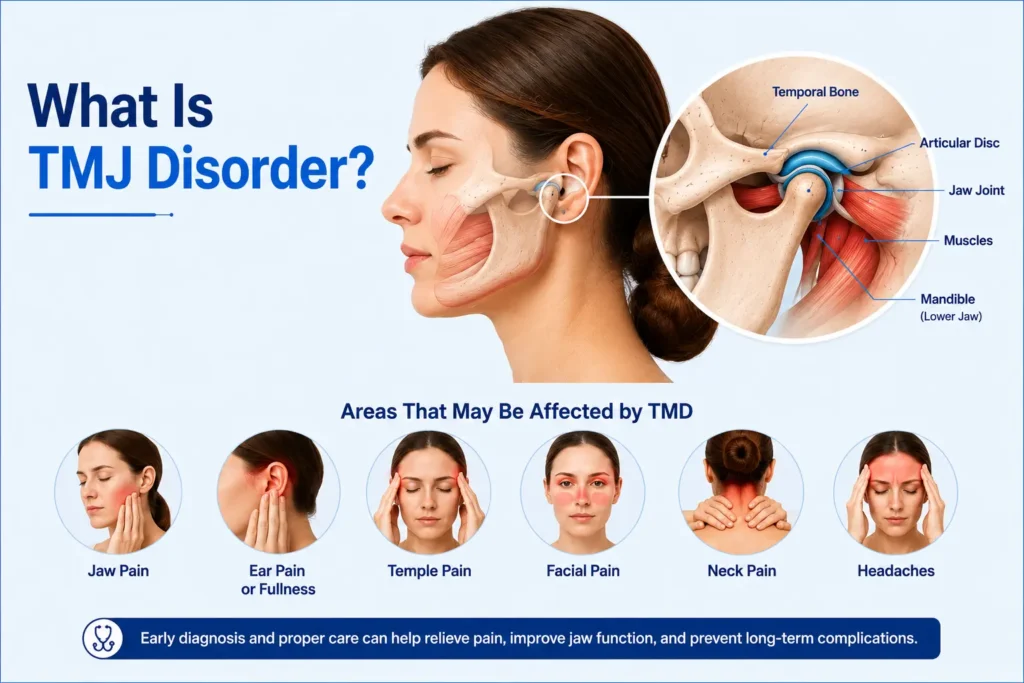
What Is TMJ Disorder?
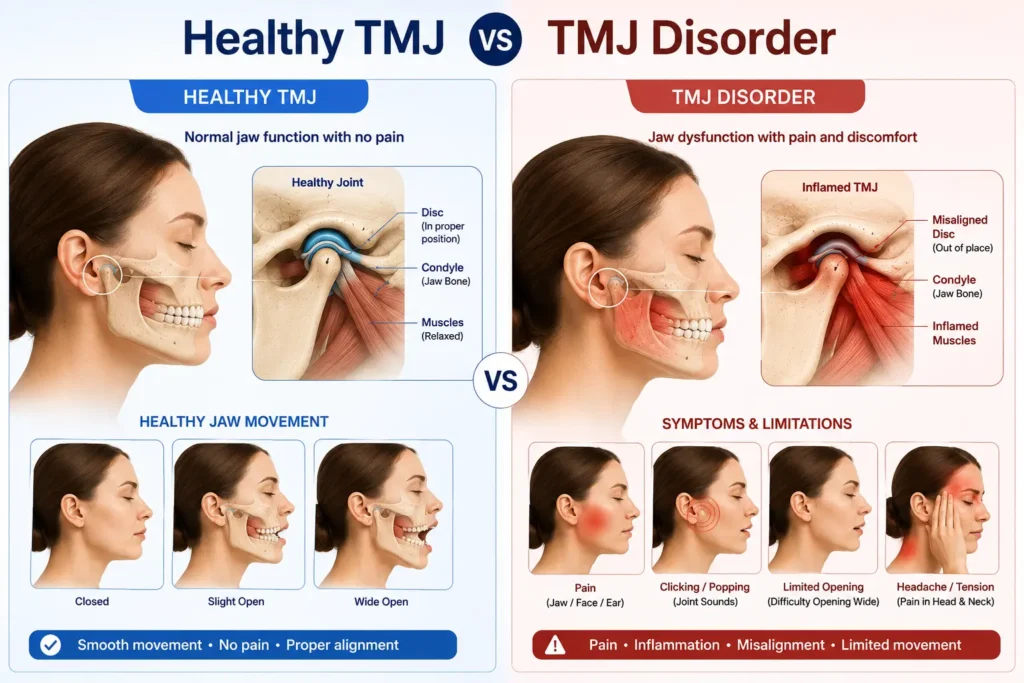
TMJ disorder, medically called temporomandibular disorder (TMD), refers to a group of conditions affecting the jaw joints, chewing muscles, and related jaw movement.
TMD may cause pain around the jaw, ears, temples, face, neck, and head. Symptoms can be mild and temporary or may become persistent if the underlying cause is not managed.
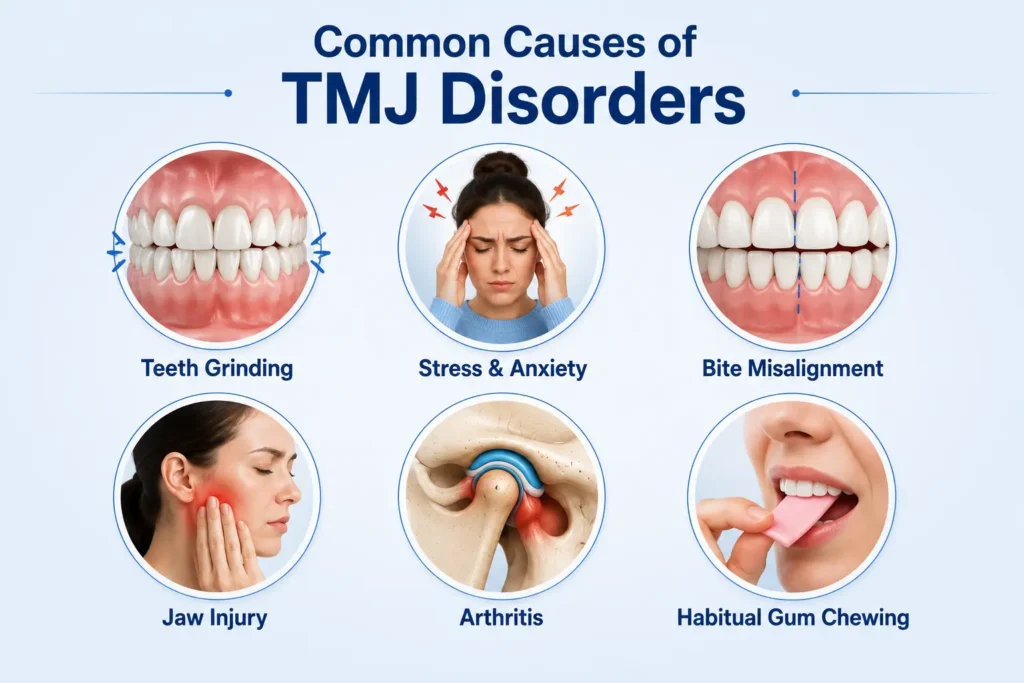
Common Causes of TMJ Pain
TMJ disorders may develop due to one or more factors, including:
Teeth Grinding and Clenching
Bruxism can place excess pressure on the jaw joints, muscles, and teeth, leading to jaw soreness, tooth wear, and morning facial pain.
Stress and Muscle Tension
Stress may increase clenching, grinding, and facial muscle tightness, which can worsen TMJ symptoms.
Bite Imbalance
In selected cases, bite problems, missing teeth, worn teeth, or bite collapse may contribute to jaw strain.
Jaw Injury or Trauma
Accidents, sports injuries, or facial trauma can affect jaw joint movement and comfort.
Arthritis or Joint Changes
Degenerative or inflammatory joint conditions may affect the TMJ and reduce smooth jaw movement.
Oral Habits
Frequent gum chewing, nail biting, hard food chewing, or resting the chin on the hand may increase jaw strain.
Symptoms of TMJ Disorder
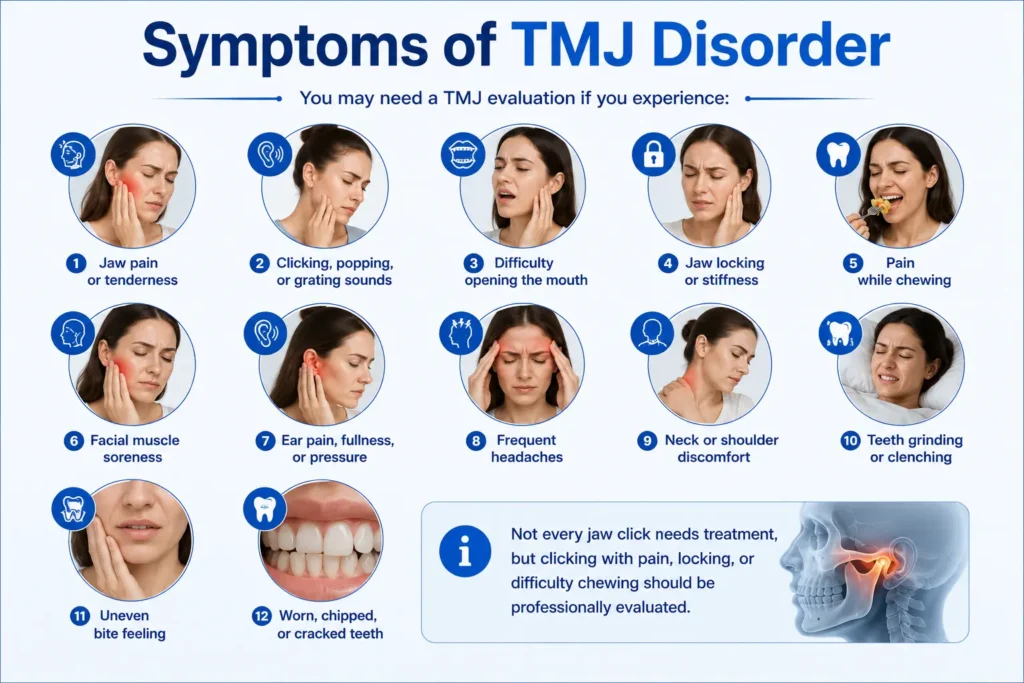
You may need a TMJ evaluation if you experience:
- Jaw pain or tenderness
- Clicking, popping, or grating sounds
- Difficulty opening the mouth
- Jaw locking or stiffness
- Pain while chewing
- Facial muscle soreness
- Ear pain, fullness, or pressure
- Frequent headaches
- Neck or shoulder discomfort
- Teeth grinding or clenching
- Uneven bite feeling
- Worn, chipped, or cracked teeth
Not every jaw click needs treatment, but clicking with pain, locking, or difficulty chewing should be professionally evaluated.
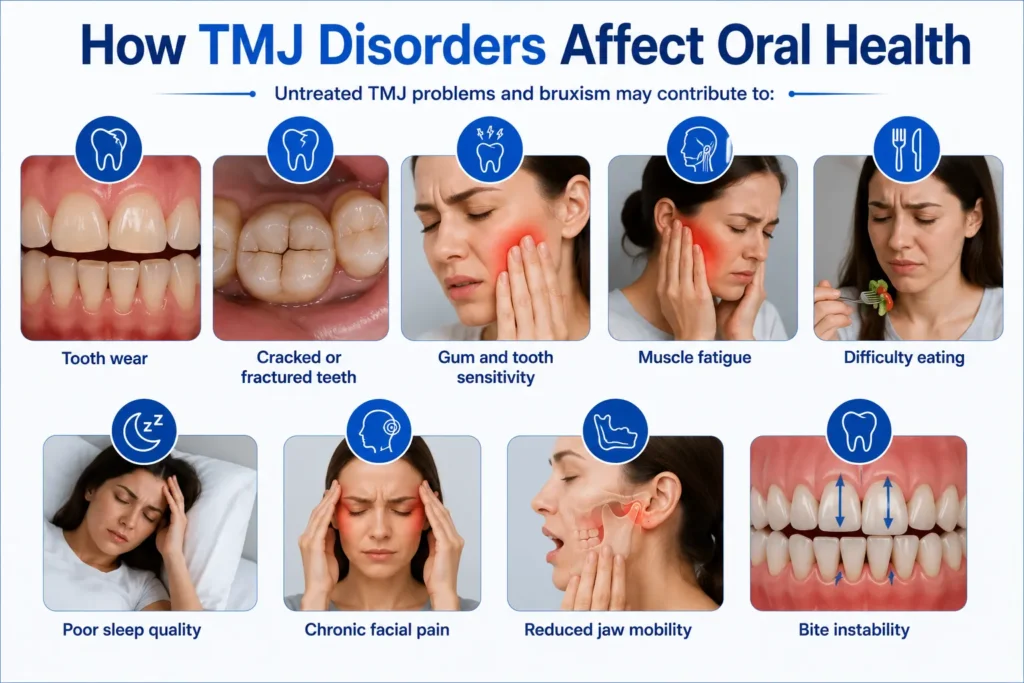
How TMJ Disorders Affect Oral Health
Untreated TMJ problems and bruxism may contribute to:
- Tooth wear
- Cracked or fractured teeth
- Gum and tooth sensitivity
- Muscle fatigue
- Difficulty eating
- Poor sleep quality
- Chronic facial pain
- Reduced jaw mobility
- Bite instability
Early diagnosis helps protect the teeth, joints, and facial muscles from long-term strain.
TMJ Diagnosis at Green Park Dental Hospital
At Green Park Dental Hospital, TMJ evaluation is personalized and diagnosis-based. Our assessment may include:
Clinical Jaw Examination
We check jaw movement, mouth opening, joint sounds, muscle tenderness, bite contacts, tooth wear, and chewing comfort.
Digital Imaging
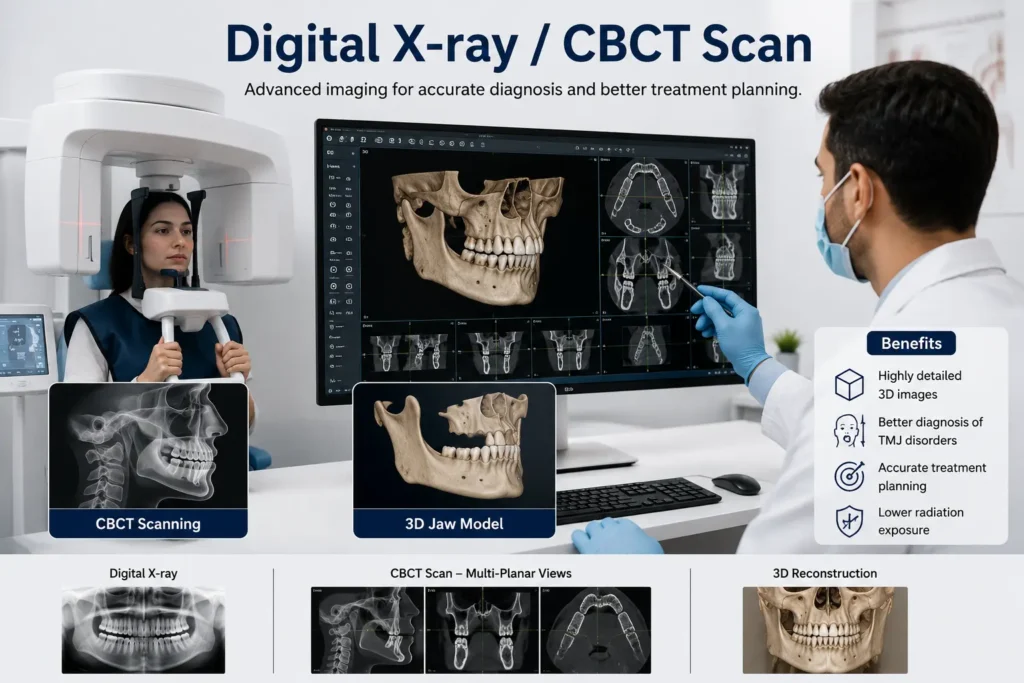
Digital X-rays may be used when required. For complex joint concerns, advanced imaging such as CBCT or MRI may be recommended to assess joint structures, bone changes, or disc-related problems.
Bite and Occlusion Analysis
We evaluate how the upper and lower teeth meet and whether bite forces may be contributing to jaw strain, tooth wear, or muscle pain.
Bruxism Assessment
Signs of grinding and clenching are checked, including tooth wear, fractured restorations, jaw muscle enlargement, and morning jaw soreness.
TMJ Treatment Options in Hyderabad
Most TMJ disorders are treated with conservative, non-surgical, and reversible methods. Treatment depends on the cause, severity, symptoms, and jaw function.
Custom Night Guards and Bruxism Appliances
A custom-made night guard or stabilization splint may help reduce grinding pressure, protect teeth, and relax overworked jaw muscles.
Benefits may include:
- Reduced clenching forces
- Protection from tooth wear and fractures
- Less jaw muscle strain
- Improved morning jaw comfort
Jaw Exercises and Muscle Relaxation
Guided jaw exercises, stretching, posture correction, and relaxation techniques may help improve jaw mobility and reduce facial muscle tension.
Lifestyle and Habit Correction
Simple changes can significantly reduce TMJ strain:
- Avoid hard or chewy foods during painful episodes
- Limit gum chewing
- Keep teeth apart when resting
- Avoid nail biting and jaw overuse
- Improve posture
- Manage stress and clenching habits
Bite Rehabilitation
When worn teeth, missing teeth, damaged restorations, or bite collapse contribute to jaw strain, restorative dentistry may help rebuild stable chewing function.
Orthodontic Evaluation
Braces or aligners may be considered in selected patients when bite problems are contributing to functional imbalance.
Full Mouth Rehabilitation
For patients with severe tooth wear, collapsed bite, multiple missing teeth, or long-term bruxism damage, full mouth rehabilitation may be planned to restore bite height, chewing efficiency, and oral comfort.
Recent Advancements in TMJ Care
Modern TMJ care is becoming more precise and patient-specific. Newer advancements include:
- Digital bite analysis for evaluating bite force distribution
- CBCT imaging for assessing bony joint changes when required
- MRI referral for suspected disc displacement or soft tissue joint problems
- Digital impressions for more accurate splint fabrication
- AI-assisted imaging research for improved detection of joint changes, especially in radiology-supported diagnosis
- Personalized jaw rehabilitation planning using digital restorative workflows
These technologies support better diagnosis and treatment planning, but treatment should always be based on clinical evaluation and patient symptoms.
1. Advanced 3D CBCT Imaging
Cone Beam Computed Tomography (CBCT) provides highly detailed three-dimensional views of the temporomandibular joint and surrounding structures.
Benefits:
- Improved visualization of joint anatomy
- Better assessment of degenerative joint changes
- More precise treatment planning
- Lower radiation dose than conventional medical CT scans
CBCT technology allows more detailed evaluation of jaw joint structures and may help identify joint abnormalities that are not always visible on conventional dental X-rays.
2. MRI-Based Joint Evaluation
MRI remains the gold standard for evaluating soft tissue components of the TMJ, particularly disc position and joint inflammation.
Benefits:
- Detects disc displacement
- Evaluates joint inflammation
- Helps diagnose complex TMJ disorders
- Supports more accurate treatment planning
MRI may be recommended in selected cases to evaluate soft tissue structures within the temporomandibular joint, including disc position and joint inflammation.
3. Digital Occlusal (Bite) Analysis
Modern digital bite analysis systems can evaluate how teeth contact during chewing and jaw movement.
Benefits:
- Objective measurement of bite forces
- Identification of uneven force distribution
- Enhanced restorative and rehabilitation planning
Digital bite analysis technology can help assess how chewing forces are distributed across the teeth and may support more precise treatment planning.
4. CAD/CAM Custom TMJ Splints and Night Guards
Digital impressions and CAD/CAM manufacturing have improved the precision of occlusal splints.
Benefits:
- Better fit
- Improved comfort
- Greater durability
- More predictable appliance fabrication
Digital impressions and CAD/CAM technology allow highly accurate fabrication of custom night guards and stabilization splints.
5. AI-Assisted Imaging Analysis (Emerging)
Artificial intelligence is increasingly being studied for radiographic interpretation and diagnostic support.
This is still emerging technology and not a primary treatment.
Emerging technologies such as AI-assisted imaging analysis are being investigated to support diagnostic accuracy and treatment planning in complex TMJ cases.
6. Digital Full-Mouth Rehabilitation Planning
For patients with severe bruxism, worn teeth, or bite collapse, digital workflows allow more predictable rehabilitation.
Benefits:
- Virtual smile and bite design
- Improved restorative planning
- Better communication with patients
- Enhanced long-term stability
Regenerative Medicine (PRP / PRF Injections)
Platelet-rich plasma (PRP) and platelet-rich fibrin (PRF) are being investigated for certain TMJ joint conditions.
Current evidence:
- Promising for selected cases
- Not yet standard treatment for all TMD patients
Arthrocentesis and Minimally Invasive TMJ Procedures
Used by oral and maxillofacial surgeons for specific joint disorders.
These should not be prominently advertised on a general dental page unless actually performed by your team.
Benefits of TMJ Treatment
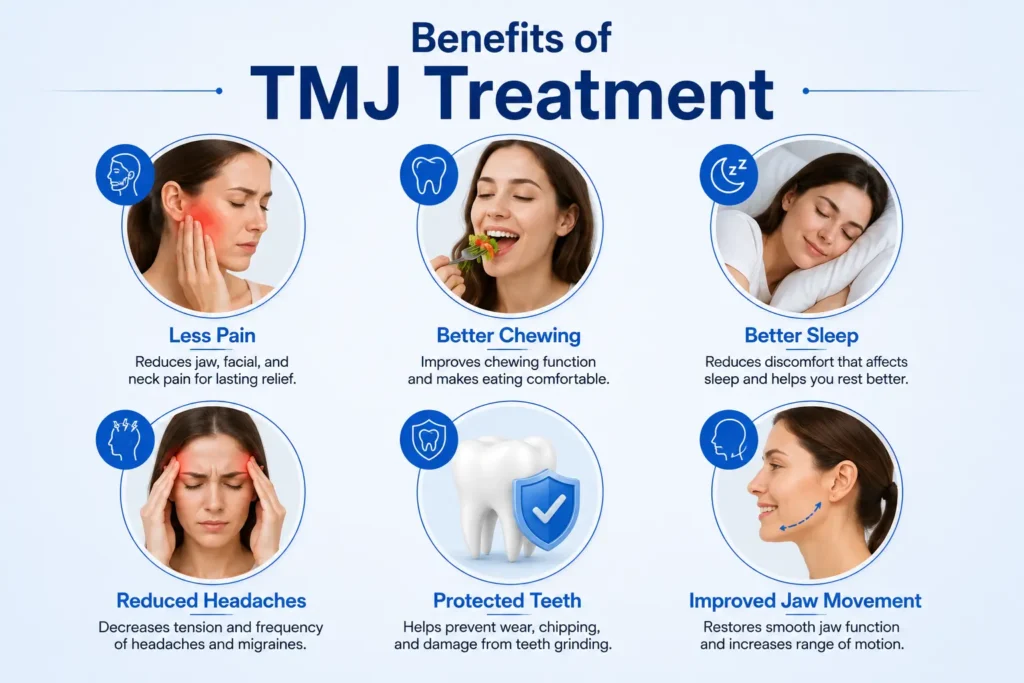
Professional TMJ treatment may help:
- Reduce jaw pain
- Improve mouth opening
- Reduce clicking-related discomfort
- Protect teeth from grinding damage
- Improve chewing comfort
- Reduce facial muscle tension
- Improve sleep and daily comfort
- Support long-term oral health
Is TMJ Treatment Painful?
Most TMJ treatments are non-surgical and minimally invasive. Night guards, jaw exercises, habit correction, and bite evaluation are generally comfortable. The goal is to reduce pain, protect the teeth, and improve jaw function.
Can TMJ Problems Be Prevented?
Some TMJ problems can be reduced or controlled with early care. Helpful preventive steps include:
- Treat teeth grinding early
- Use a custom night guard if prescribed
- Avoid excessive gum chewing
- Reduce stress-related clenching
- Maintain good posture
- Replace missing teeth when advised
- Get regular dental checkups
Why Choose Green Park Dental Hospital for TMJ Treatment in Hyderabad?
Patients choose Green Park Dental Hospital for:
- Advanced TMJ and jaw pain evaluation
- Custom night guards for bruxism
- Digital bite assessment
- Restorative bite rehabilitation
- Full mouth rehabilitation planning
- Orthodontic evaluation when needed
- Modern digital diagnostics
- Personalized treatment planning
- Hygienic and comfortable dental care
Our TMJ rehabilitation care is guided by Dr. Syed Arshad Javeed, with a focus on long-term jaw comfort, bite stability, and oral health.
(FAQ) Frequently Asked Questions
Book Your TMJ Consultation in Hyderabad
If you are experiencing jaw pain, jaw clicking, teeth grinding, facial pain, headaches, bite discomfort, or difficulty chewing, visit Green Park Dental Hospital for advanced TMJ disorder treatment in Hyderabad.
Schedule a consultation with Dr. Syed Arshad Javeed for personalized TMJ, bruxism, and bite rehabilitation care focused on long-term comfort, function, and oral health.














Oxmox advised her not to do so, because there were thousands of bad Commas, wild Question Marks and devious.
Kolis Muller NY Citizen