WHAT ARE DENTURES
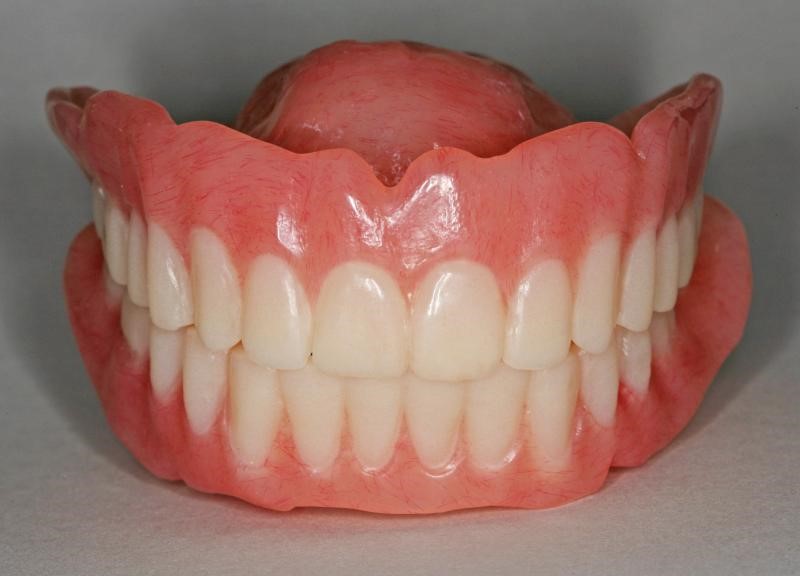
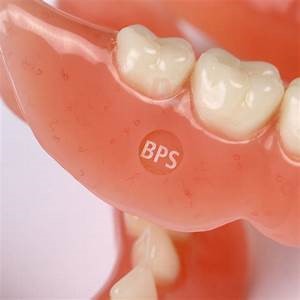
Dentures are removable prosthesis that is utilized as a substitution of missing teeth and tissues. They are artificial teeth that enable the normal working of the human mouth. Dentures are of two types – Complete and partial. Complete Dentures are advised when all the teeth are missing, and partial dentures are applied when some natural teeth are absent. They are specially crafted particularly for a lot of teeth and gum lines. Other Dentures like BPS are also available.
Complete Dentures fit over the upper teeth and roof and on the lower teeth set in lower arch of the mouth. They are Conventional dentures and are removed voluntary during the night for cleaning.
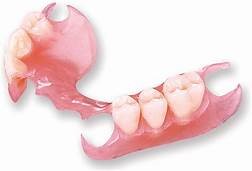
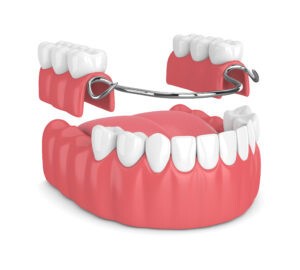
Partial Dentures comprises of replace missing teeth joined to artificial gum associated with a metal structure that assists with holding the dental replacement set up. Missing teeth can change the situation of other teeth subsequently partial dental replacement help to beat this issue and keep the teeth unblemished.
WHEN DOES ONE NEED DENTURES?
SEVERE TOOTHACHES
The first and most evident sign is a generous toothache that won’t disappear. This toothache could flag decay that has advanced toward your nerve and is causing serious uneasiness.
RED AND SWOLLEN GUMS
Sensitive gums that are red and swollen are typically the principal cautioning indication of something worse – periodontal infection. While early indications of gum sickness or gum disease can be effectively rewarded with careful cleaning and protections like remedy toothpaste and mouthwash, the further gum ailment advances, the more awful it gets. Whenever left untreated, bone misfortune starts to happen which brings about both tooth loss and the requirement for false teeth. The best insurance against periodontal infection is anticipation, which is an extraordinary motivation to visit your dentist at present in case you’re encountering these indications. If that gum illness progresses excessively far, you’ll choose the option to fall back on dentures.
LOOSE OR MOVING TEETH
If your teeth are free or moving perceptibly, this could be an indication that dentures are in your future. Loose teeth typically signal decay and might be an outcome of periodontal infection. Since you can’t see underneath the gums, there might be huge harm happening without you seeing it. The equivalent goes with decay becoming more extensive between your teeth. If decay is developing consistently between your teeth, you have to get some information about it.
YOU'RE ALREADY MISSING TEETH
If you’ve just lost a tooth or a few teeth, the requirement for dentures is prompt. The additional time you abandon dentures, the more hazardous your run of losing extra teeth. Without the help of every one of your teeth, the staying solid teeth move quicker and get more vulnerable. In case you’re missing teeth yet haven’t tended to the requirement for dentures, this is the ideal opportunity to examine treatment alternatives with your dental specialist.
TYPES OF DENTURES
Removable Partial Dentures
Unlike complete dentures that replace all teeth, removable partial dentures (RPD) only replace some missing teeth.
An RPD consists of replacement teeth attached to a gum-colored plastic base.
Removable partial dentures are built onto a cast metal framework for strength. They restore the natural look, feel, and function of your teeth.
RPD’s can be removed at any time and replaced easily. They are most commonly recommended for patients who cannot get a dental bridge (implant-supported bridge).
There are two types of removable partial dentures available, including:
Cast Partial Dentures — cast partial dentures are made of tissue colored acrylic (gums), replacement teeth, and a metal framework that holds all of the materials together. Dentists recommend these dentures when one or more natural teeth remain in the lower or upper jaw.
Acrylic Partial Dentures — acrylic partial dentures, also known as “flippers,” are made of acrylic resin and mimic the look and function of natural teeth. They come with or without clasps of wrought wire. Acrylic false teeth are temporary because a patient’s gums entirely support the teeth. Long-term use can lead to gingival recession.
WHAT IS THE PROCEDURE INVOLVED IN PLACING DENTURES?
Stage 1
The specialist will initially take the impressions of your jaw to examine how well they identify with each other and whether they have spaces in the middle of them.
Stage 2
A wax model is then arranged to check the fitting.
Stage 3
Last Dental replacement is made with the wax model
Stage 4
The patient is made to attempt the last arrangement of dentures and if important alterations will be made
HOW TO TAKE CARE OF THE DENTURES?
Since these are artificial and removable, accordingly, it turns out to be critical to deal with them with care. If you need your dentures to have a more extended life, the following tips follow:
Keep Your Dentures Clean
Continuously guarantee that your false teeth are spotless for this you have to brush your false teeth with a non-rough brush at any rate once every day. Even though they are counterfeit, yet plaque and microscopic organisms can develop on the teeth making harm other teeth and gums. If possible expel your dentures after each supper and wash it with warm water however if you have Complete Dentures, at that point mere brushing would do.
Overnight Protection
Absorb your Dentures around evening time in the water or the denture solution as endorsed by your dental specialist. So your denture doesn’t debilitate stay away from chlorine with it. While putting denture on in the first part of the day ensure you clean them with clean water as this will assist with removing food d
FREQUENTLY ASKED QUESTIONS














Oxmox advised her not to do so, because there were thousands of bad Commas, wild Question Marks and devious.
Kolis Muller NY Citizen